- 1. US AI toy ban proposal risks Jessore's $25M annual US exports.
- 2. Crypto Fear & Greed Index at 33 signals tech market caution.
- 3. 5,000 workers and BDT 500 crore remittances face disruptions.
Rep. Blake Moore introduced a US AI toy ban proposal targeting data-collecting toys, per his Congress.gov profile. This endangers Jessore exporters' $25 million annual shipments to the US. The Crypto Fear & Greed Index hit 33 on October 10, 2024, per Alternative.me, signaling tech market caution.
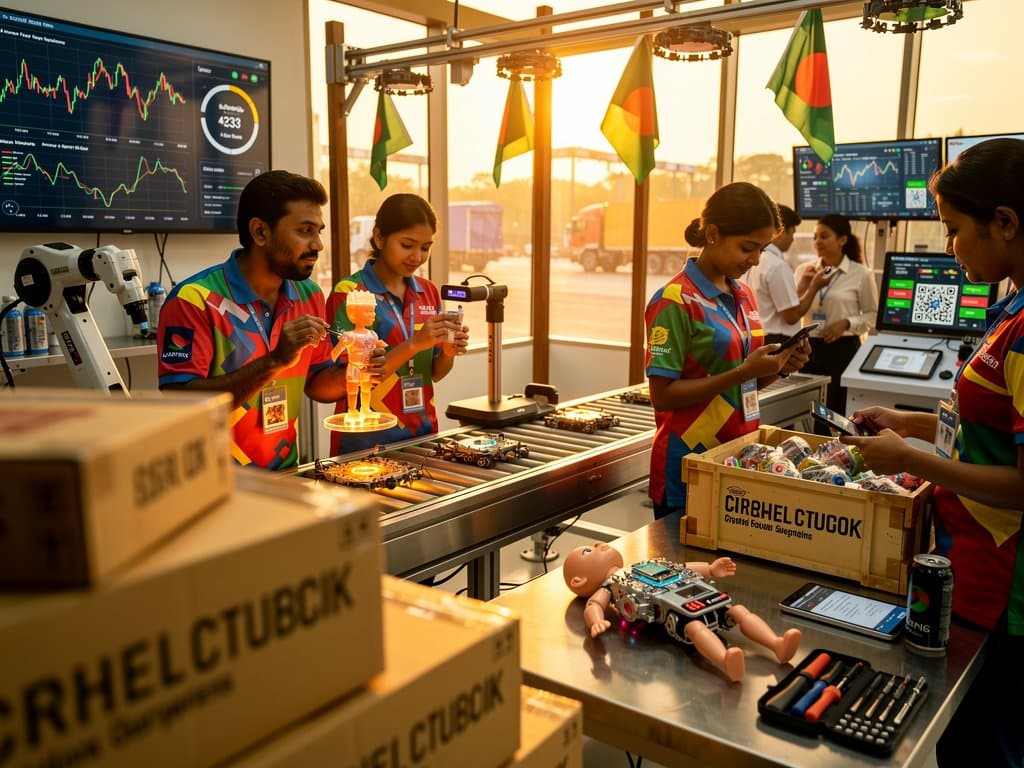
Jessore factories produce plastic toys with AI voice recognition and motion sensors for US retailers like Walmart.
Jessore Exporters Face US AI Toy Ban Proposal Disruptions
Export Promotion Bureau (EPB) data shows Bangladesh toy exports to the US reached $25 million in FY2023, with Jessore supplying 40%, per EPB's October 2024 report. Tech features like adaptive learning boost margins by 15-20%.
Over 5,000 workers operate assembly lines near Benapole border, according to Jessore Chamber of Commerce. A ban requires redesigns, raising chip costs from China and Taiwan suppliers.
Bangladesh Bank reports diaspora remittances to Jessore firms hit BDT 500 crore (USD 4.2 million) yearly. US Bangladeshis fund expansions. Trade risks tighten Khulna bank credit; forwards hedge BDT-USD at 110 per dollar.
Crypto Fear & Greed Index Ties to AI Regulation Fears
Alternative.me's Crypto Fear & Greed Index at 33 reflects fear amid AI rules. CoinGecko lists Bitcoin (BTC) at $75,531 (-0.7%), Ethereum (ETH) at $2,311.98 (-0.6%), XRP at $1.42 (-0.7%) on October 10.
- Asset: BTC · Price (USD): 75,531 · 24h Change: -0.7%
- Asset: ETH · Price (USD): 2,311.98 · 24h Change: -0.6%
- Asset: XRP · Price (USD): 1.42 · 24h Change: -0.7%
AI toys use edge computing similar to blockchain. This echoes EU MiCA rules, effective 2026.
Bangladesh Economic Impacts from US AI Toy Ban Proposal
Bangladesh Investment Development Authority (BIDA) data pits the nation against Vietnam in US toy imports. Jessore targets holidays with sensor dolls, driving 30% local revenue.
Toy profits fund bKash and Nagad upgrades. Bangladesh Bank notes these wallets handled BDT 1.5 lakh crore in FY2024, buffering shocks for diaspora families.
Garment sectors face parallel scrutiny. Jessore firms test blockchain tracking for WTO rules, per BASIS. IT exports rose 38% to $1.4 billion in FY2024, Bangladesh Association of Software and Information Services (BASIS) reports.
Diaspora Remittances and Investment Shifts
US-UK diaspora send funds via Western Union and bKash, aiding 10,000 Jessore families. Uncertainty curbs IT outsourcing investments nearby.
Exporters shift to EU under GDPR. UN Comtrade shows Vietnam toy exports up 25% last year, squeezing Bangladesh.
Remittances link to fintech growth. bKash partnerships enable real-time tracking, vital for Jackson Heights readers funding kin.
Responses to US AI Toy Ban Proposal
Commerce Ministry and EPB met October 12 for WTO replies, per ministry statement. Jessore prototypes mechanical toys.
Blockchain pilots with bKash enhance transparency. Congress debates continue to Q1 2025.
Bangladesh seeks US pacts. Exporters allocate BDT 100 crore for redesigns and fintech supply chains. Nagad sustains growth amid volatility, per Bangladesh Bank FY2024 data.
Frequently Asked Questions
What is the US AI toy ban proposal?
Rep. Blake Moore's bill bans toys with AI like voice recognition due to child privacy risks, per Congress.gov. Jessore exporters face redesign costs.
How does the US AI toy ban proposal impact Jessore exporters?
Threatens $25M US exports (EPB data), 30% revenue, 5,000 jobs, and BDT 500 crore remittances (Bangladesh Bank).
What does the Crypto Fear & Greed Index at 33 mean?
Signals fear in tech markets (Alternative.me), with BTC at $75,531 and ETH at $2,311.98 (CoinGecko), tying to AI rules.
What responses are Jessore exporters taking?
Prototyping non-AI toys, blockchain tracking, EU pivots. Commerce Ministry seeks WTO exemptions.