- 1. NEUROPix AI particle detectors cut physics data noise on-sensor for HL-LHC.
- 2. $22B remittances (Bangladesh Bank) fund Bangladesh AI training and jobs.
- 3. Bitcoin at $75,843 (CoinGecko) supports low-power neuromorphic hardware growth.
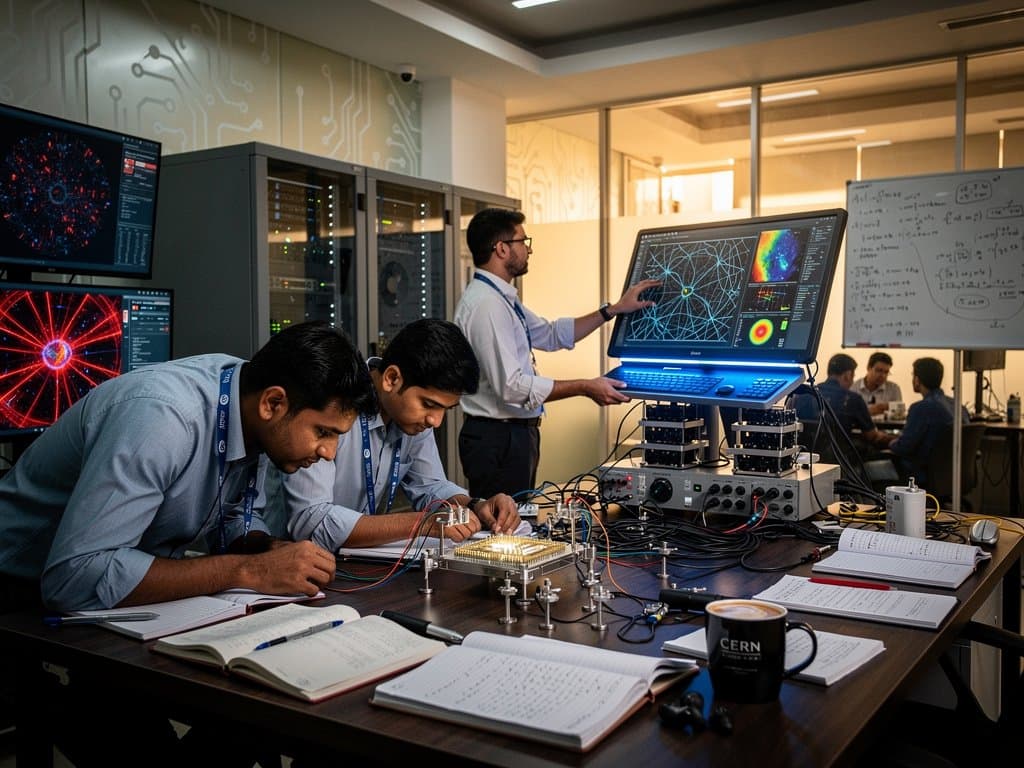
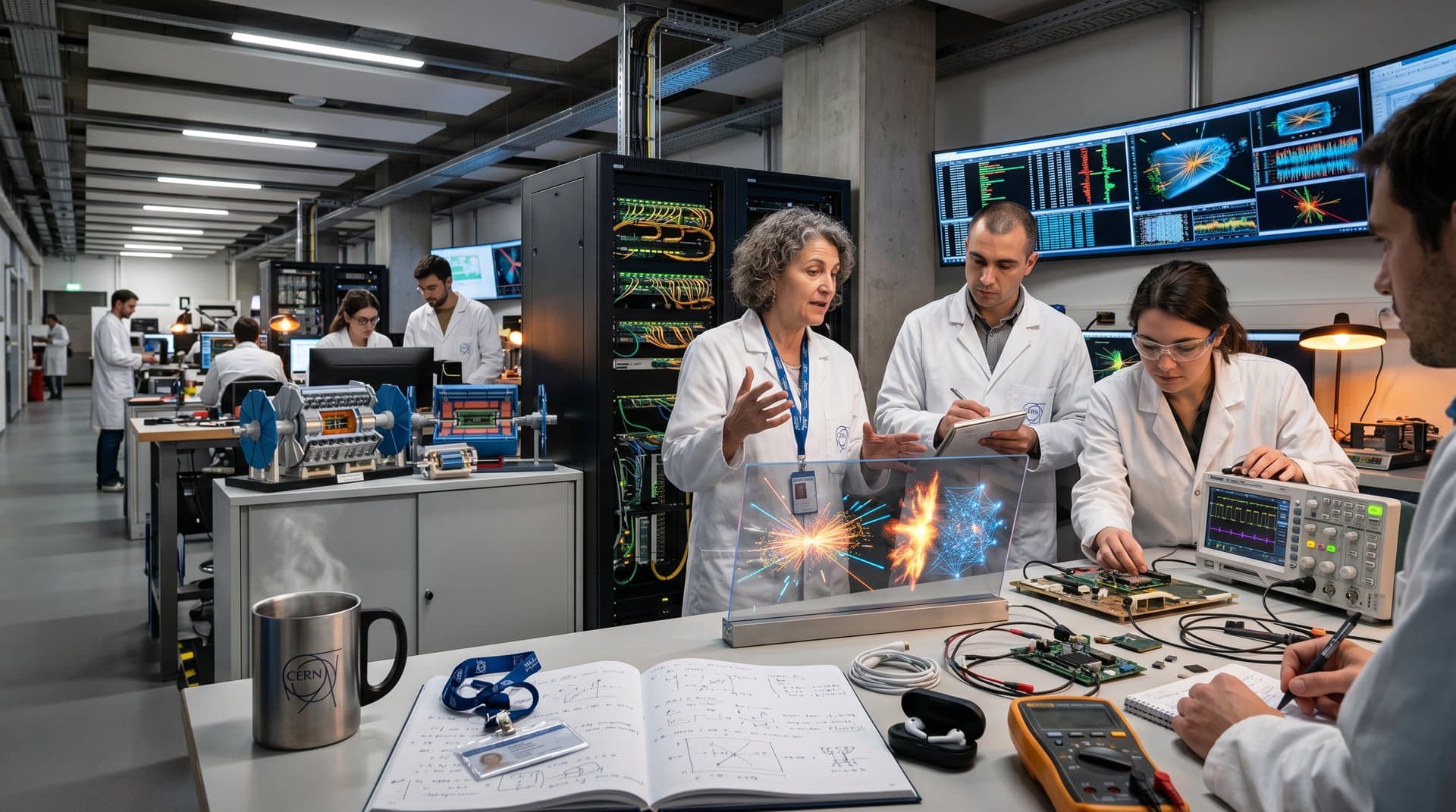
CERN and University of Geneva researchers unveiled NEUROPix AI particle detectors on April 9, 2024. These devices embed spiking neural networks directly into hardware for High-Luminosity Large Hadron Collider (HL-LHC) upgrades. Pixels activate only on particle hits. They filter noise in real-time and reduce latency to microseconds.
According to CERN's announcement, prototypes excelled in beamline tests for hit reconstruction.
Traditional detectors overwhelm systems with data floods. NEUROPix processes events on-sensor. It handles petabyte-scale fluxes in radiation-hardened designs, as detailed in CERN's neuromorphic demonstrator report.
Neuromorphic Computing Powers NEUROPix AI Particle Detectors
Each pixel mimics brain neurons. It fires spikes only on particle strikes. Networks classify tracks instantly. This skips slow off-chip data transfers.
Open-source models enable customization. Daily data volumes drop sharply before storage. Physicists worldwide benefit from streamlined analysis.
Bangladesh researchers at BUET access CERN open data. They simulate these networks using Python libraries like Brian2 and NEST.
Stable Crypto Markets Fund Bangladesh AI Hardware Push
Bitcoin trades at $75,843 with a $1,517.3 billion market cap, per CoinGecko data on October 10, 2024. Ethereum hits $2,320.91 ($279.9 billion cap), per CoinGecko.
Solana reaches $85.65 ($49.3 billion cap). XRP stands at $1.43 ($87.7 billion cap). The Fear & Greed Index reads 33, indicating caution but steady tech investments.
This stability funnels capital into low-power AI hardware like NEUROPix. Bangladesh fintech firms hedge with crypto amid remittance volatility.
- Cryptocurrency: Bitcoin (BTC) · Price (USD): 75,843 · Market Cap (B USD): 1,517.3 · Source: CoinGecko, Oct 10, 2024
- Cryptocurrency: Ethereum (ETH) · Price (USD): 2,320.91 · Market Cap (B USD): 279.9 · Source: CoinGecko, Oct 10, 2024
- Cryptocurrency: XRP · Price (USD): 1.43 · Market Cap (B USD): 87.7 · Source: CoinGecko, Oct 10, 2024
- Cryptocurrency: Solana (SOL) · Price (USD): 85.65 · Market Cap (B USD): 49.3 · Source: CoinGecko, Oct 10, 2024
Crypto gains support Bangladesh's IT exports, which hit $1.4 billion in FY2023 (BASIS report).
BUET, JSTU Train Specialists for NEUROPix Tech
Bangladesh University of Engineering and Technology (BUET) integrates machine learning into curricula. It uses CERN open datasets for hands-on training. Jessore Science and Technology University (JSTU) launches neuromorphic computing programs.
The Digital Bangladesh 2026 initiative allocates funds via a2i program for AI labs (a2i.gov.bd, 2024). Diaspora mentors from London and Jackson Heights guide Jessore students remotely.
BUET reports 500 students enrolled in AI tracks this semester. JSTU bootcamps target 200 reskilled workers annually.
These efforts connect local talent to global physics research. Diaspora readers in the UK and US contribute via knowledge sharing.
$22B Remittances Drive Bangladesh Neuromorphic Jobs
Bangladesh Bank records $22 billion in remittances for FY2023. This equals 6% of GDP and fuels AI scholarships and startups (Bangladesh Bank annual report).
Dhaka's tech parks hire neuromorphic specialists. bKash and Nagad deploy edge AI for real-time fraud detection in mobile wallets.
Garment sector reskilling accelerates. JSTU partners with factories to train 10,000 workers yearly for tech roles (BASIS, 2024).
Entry-level hardware engineers earn BDT 50,000-100,000 monthly (~$420-$840 USD). Khulna firms prototype sensors for export to EU markets.
Jessore startups develop AI firmware. They link to global supply chains via BASIS networks. bKash corridors from UK and US remit BDT 500 crore monthly to Jessore hubs.
Remittance growth hit 4.7% in 2024 (World Bank). This powers dual audiences: homeland factories and diaspora investors.
NEUROPix Tech Shapes Bangladesh's AI Future
BUET hosts workshops to prototype NEUROPix-inspired sensors (BUET research bulletin, 2024). CERN collaborations open EU supply chains.
Neuromorphic chips extend to Jessore agriculture drones and bKash payment verification.
Government budgets BDT 1 billion for AI parks (Ministry of Finance, FY2025). Stable crypto attracts $200 million venture capital (BIDA data).
HL-LHC trials validate the technology at scale. Bangladesh positions as a neuromorphic hub, blending remittances, education, and physics innovation.
Frequently Asked Questions
What are NEUROPix AI particle detectors?
NEUROPix integrates neuromorphic pixels and spiking neural networks for on-sensor particle tracking in HL-LHC. CERN and University of Geneva lead development.
How do NEUROPix AI particle detectors improve efficiency?
Pixels activate only on hits, filtering noise hardware-side. This reduces data bandwidth and latency for real-time analysis.
How does NEUROPix create AI tech jobs in Bangladesh?
BUET and JSTU train specialists for Dhaka parks and bKash fintech. $22B remittances fund reskilling in neuromorphic hardware.
What Bangladesh education steps adopt NEUROPix technology?
Curricula use CERN data for spiking network simulations. a2i funds labs; Jessore programs prepare global roles.