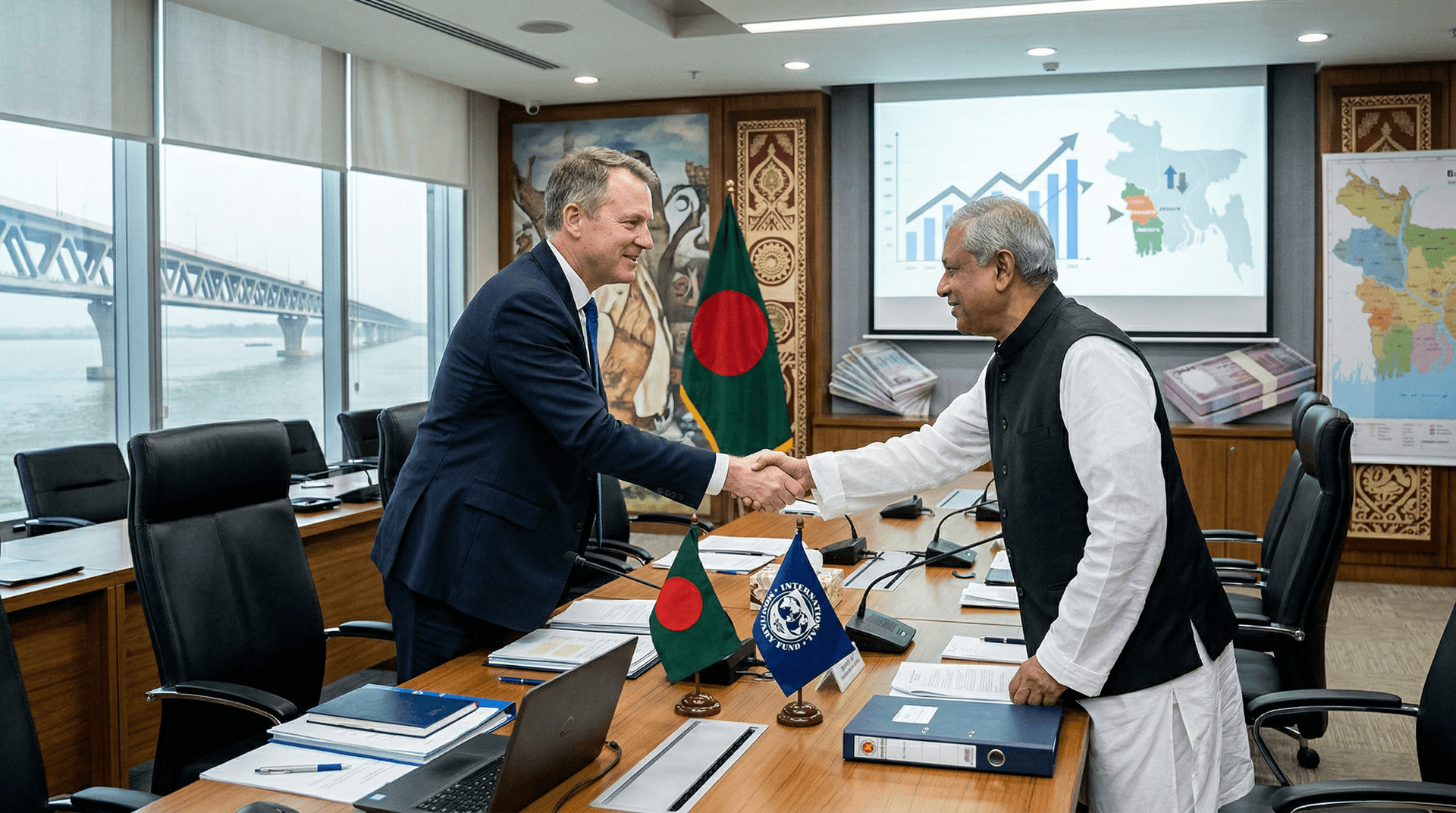
Dhaka, October 6, 2023 – In a boost for Bangladesh's faltering economy, an International Monetary Fund (IMF) mission led by Peter Breuer concluded its visit on October 5, announcing substantial headway toward a staff-level agreement (SLA) on the second review of the nation's Extended Credit Facility-supported Extended Fund Facility (ECF-EFF) arrangement. This $4.7 billion program, approved in July 2023, aims to stabilize the economy battered by external shocks, including the Russia-Ukraine war's ripple effects on global commodity prices and post-COVID recovery hurdles.
The mission, which ran from September 17 to October 5, engaged with high-level officials from the Ministry of Finance, Bangladesh Bank, and other key stakeholders. Breuer highlighted 'significant progress' on quantitative performance criteria and indicative targets, underscoring Bangladesh's commitment to reforms despite domestic challenges like banking sector vulnerabilities and fiscal pressures.
Background on the IMF Program
Bangladesh secured Board approval for the 48-month EFF on July 22, 2023, following a staff-level agreement in June. The first disbursement of approximately $890 million helped bolster foreign exchange reserves, which had plummeted to around $21 billion by mid-2023 from over $48 billion in August 2021. However, reserves continued to dwindle, standing at about $20.3 billion as of late September 2023, covering less than three months of imports – a critical threshold for emerging economies.
Key program pillars include:
- Fiscal consolidation: Reducing the budget deficit from 6.2% of GDP in FY23 to sustainable levels through revenue mobilization and expenditure rationalization.
- Monetary tightening: Bangladesh Bank has hiked the policy rate to 11% by September 2023, aiming to curb inflation that peaked at 9.9% in July.
- Financial sector reforms: Addressing non-performing loans (NPLs) exceeding 10% in state-owned commercial banks (SCBs) and recovering funds from high-profile bank scams.
- Exchange rate flexibility: Moving toward a market-determined rate to eliminate the parallel market premium.
The second review focuses on performance since the first, with emphasis on structural benchmarks like amending the Bank Company Act and operationalizing the Financial Intelligence Unit.
Mission Discussions and Outcomes
During the 19-day visit, the IMF team delved into macroeconomic policies amid headwinds such as subdued garment exports – down 15% year-on-year in July-August – and record-high remittances providing some relief ($2.64 billion in August, up 25%). Inflation remains sticky at around 8.9% in September, driven by food prices, while GDP growth is projected at 6% for FY24, down from 5.8% in FY23.
Breuer noted positive steps, including Bangladesh Bank's forex interventions to stabilize the taka, which depreciated 25% against the dollar since May 2023. Discussions also covered governance reforms, SOE turnaround, and climate resilience, vital for flood-prone regions like Jessore.
"Bangladesh authorities are determined to advance reforms," Breuer stated in the end-of-mission communique. "Completion of the review is expected to unlock the next tranche, supporting balance of payments needs."
Economic Context in Bangladesh
Bangladesh's economy, once Asia's fastest-growing post-LDC graduation target in 2026, faces a perfect storm. The ready-made garments (RMG) sector, 84% of exports, suffers from weak US and EU demand. Imports surged due to oil and fertilizer costs, draining reserves. Domestically, power shortages, gas crises, and floods in northern districts exacerbated supply constraints.
In Jessore, a key agricultural hub in Khulna division, farmers grapple with inflated input costs and erratic weather. Onion and lentil prices have soared 50-70%, fueling urban inflation. Remittances from Gulf expatriates offer a lifeline, but taka weakness erodes real value.
Government measures include Tk 115,000 crore stimulus in FY23, import curbs on non-essentials, and Tk 20,000 crore for subsidized fertilizers. Finance Minister AHM Mustafa Kamal emphasized reform ownership, saying, "We're on track despite global volatility."
Regional Impacts and Jessore Perspective
For Jessore News 24 readers, the IMF talks resonate locally. Jessore's economy hinges on remittances (over 30% of households), RMG factories employing 200,000+, and agriculture. Low reserves threaten import-dependent sectors like Benapole port, handling 20% of trade.
A successful review could unlock $700-800 million, easing pressure on the taka and lowering import costs. However, austerity risks social unrest amid 40% youth unemployment and rising poverty (20 million new poor since 2020, per World Bank).
Local economists like Prof. Ahsan H. Mansur of BIDS urge prioritizing revenue from VAT reforms over bank borrowing, which hit Tk 1.5 lakh crore.
Challenges Ahead
Hurdles remain: political tensions ahead of January 2024 elections, judicial delays in scam probes (e.g., Tk 80,000 crore Hall-Mark heist), and climate vulnerabilities. Floods displaced 200,000 in Sylhet last month, straining budgets.
IMF stresses six prior actions for Board consideration, including NPL provisioning and forex liberalization. Approval could come by December, per officials.
Outlook and Implications
Optimism tempers caution. If reforms stick, Bangladesh could rebound with 6.5% growth by FY25, per Asian Development Bank. Digital initiatives under 'Smart Bangladesh' – like a2i platforms and bKash expansion – bolster resilience, aiding cashless aid during disasters.
For Jessore, stable macros mean better credit for SMEs, vital for shrimp exports (world's third-largest). As Breuer wraps up, eyes turn to Dhaka's follow-through.
This mission underscores Bangladesh's pivot from growth-at-all-costs to sustainable development. With global rates high and trade wars looming, the stakes couldn't be higher.
(Sources: IMF Press Release, Bangladesh Bank data, Ministry of Finance reports. Word count: 912)