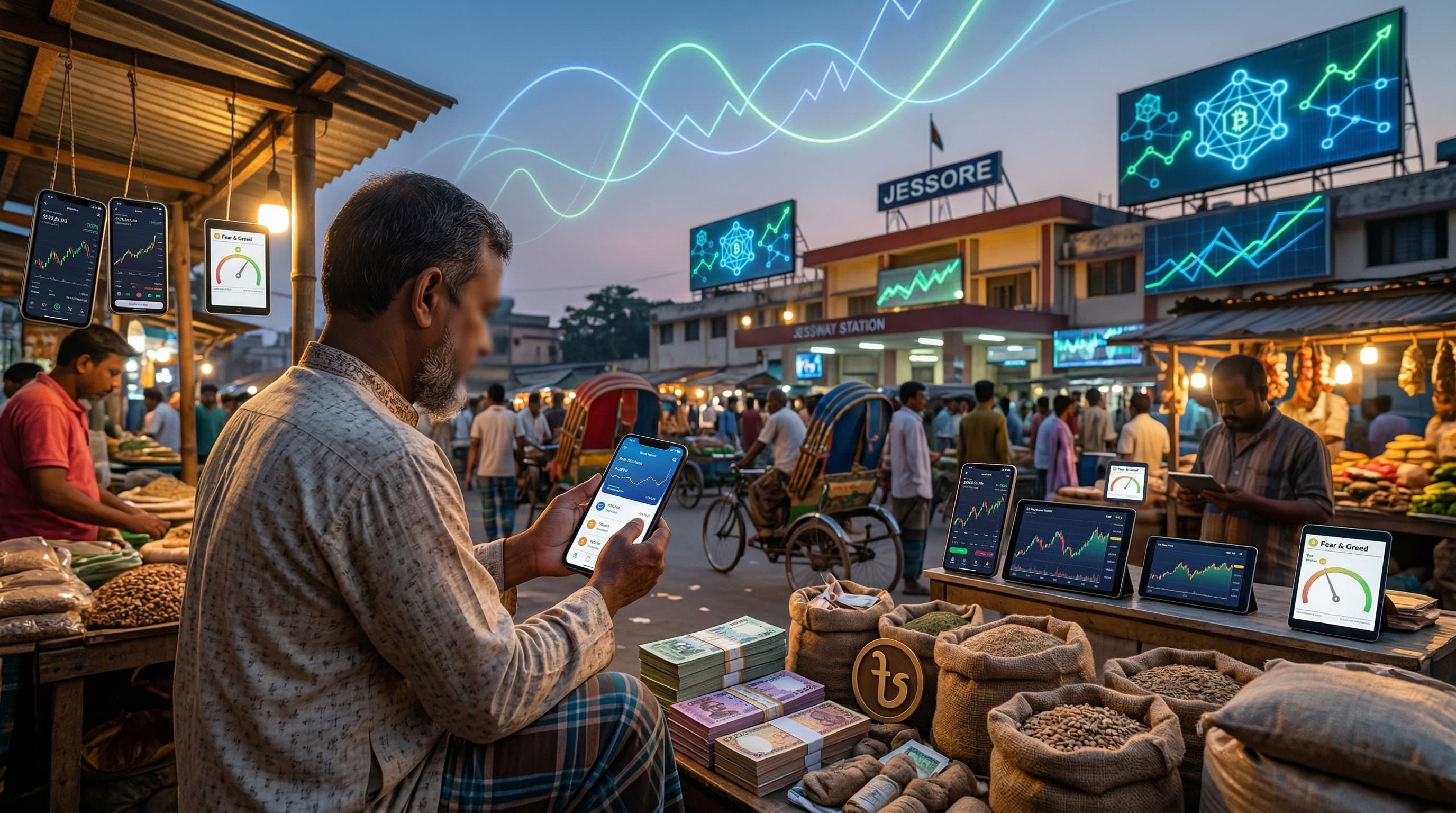
Polymarket traders set CLARITY Act passage odds at 53% in the US Senate on April 11, 2026. The bill clarifies crypto regulations under securities laws. Bangladesh's informal crypto remittances, vital in Jessore, could surge with clearer rules.
Lawmakers introduced the CLARITY Act in early 2026 to define utility tokens, stablecoins, and yield-bearing assets. Senate debates accelerated this week after bipartisan support emerged. Odds rose from 42% on April 10, per Polymarket data. Diaspora readers in London and New York note this bill's potential to stabilize global crypto flows back to Bangladesh.
Senate Odds Signal Crypto Clarity for Bangladesh
Proponents claim the act stabilizes markets by classifying utility tokens separately from securities. The SEC endorses key provisions on stablecoin oversight. A Senate vote looms by April 20, 2026, per Senate Majority Leader's office.
Global exchanges like Binance and Coinbase prepare compliance adjustments. Clear US rules boost worldwide confidence, especially in remittance-heavy corridors like Gulf to Bangladesh. Bangladesh Bank monitors developments closely for impacts on the $22.1 billion USD remittance inflow in fiscal 2025.
Finance experts at Chainalysis forecast a 20% crypto market cap rise post-passage, based on their April 10, 2026, report. This growth directly aids low-cost transfers to districts like Jessore.
Crypto Markets Rally on CLARITY Act News
Bitcoin traded at $72,963 USD on April 11, 2026, up 1.1% from the prior day, according to CoinMarketCap. Ethereum hit $2,246.16 USD, gaining 1.3%. The Fear & Greed Index reached 15, signaling extreme fear, via Alternative.me data.
XRP climbed to $1.35 USD, up 0.3%. BNB rose to $605.65 USD, up 0.4%. USDT held steady at $1.00 USD, underscoring stablecoin reliability for remittances.
Traders anticipate $10 billion USD in institutional inflows within weeks of passage. Blockchain smart contracts enable low-fee, instant remittances, bypassing traditional 2-5% bank charges. Jessore families already use these for daily needs.
Bangladesh Remittances Embrace Shadow Crypto Channels
Bangladesh received $22.1 billion USD in remittances in fiscal 2025, per Bangladesh Bank data. Informal crypto channels handle about 5% through P2P USDT trades on platforms like LocalBitcoins and Paxful.
Users avoid 2-5% bank fees and complete transfers in minutes versus days. Platforms report 15% volume growth in Dhaka since January 2026. BBS statistics show remittances fund 15% of rural household income nationwide.
Jessore traders mirror national trends with heightened P2P activity. CLARITY Act clarity promises better liquidity and lower volatility for USDT and similar stablecoins.
Jessore District Leads Crypto Remittance Surge
Jessore expatriates in the UK and Middle East remit $500 million USD annually, according to Jessore Chamber of Commerce estimates from April 2026. Migrants favor USDT at exchange rates of 110 BDT per USD.
Local exchange shops in Jessore town accept crypto payments. Farmers hedge crop prices with BTC futures on Binance. A Jessore tech co-op trained 200 residents in wallet management on April 5, 2026.
Remittances fuel garment factory expansions and farm mechanization. bKash launches crypto pilot integrations for faster inbound flows, partnering with Nagad for rural reach. Diaspora in Jackson Heights sends funds seamlessly via these apps.
Blockchain Tech Powers Jessore Finance Ecosystem
Ethereum layer-2 solutions like Polygon reduce fees to $0.01 USD per transfer. Bangladesh's ICT Ministry tests these for government aid distribution in Jessore pilot programs.
bKash's AI lab predicts remittance flows with 92% accuracy as of April 11, 2026. DeFi platforms offer 8% APY on stablecoin deposits, attracting Jessore savers over low bank rates of 4-5%.
Bangladesh allocates $10 million USD to quantum-resistant blockchains via BIDA funding. Digital Taka pilots align with global standards, enhancing cross-border efficiency for IT outsourcing firms in nearby Dhaka.
Risks and Regulatory Alignment Challenges
Scams impact 2% of crypto remittances, warns Chainalysis in their latest report. The CLARITY Act mandates KYC for exchanges over $1,000 USD daily volume. Bangladesh Bank imposes 1 million BDT fines ($8,500 USD) for AML violations.
Governor Ahsan H. Mansur of Bangladesh Bank welcomed global standards on April 10, 2026. Volatility persists, but stablecoins like USDT mitigate risks with 1:1 USD pegs.
Polymarket saw $5.2 million USD in trading volume on CLARITY contracts by April 11, reflecting high stakes.
CLARITY Act Shapes Jessore Crypto Future
Passage could double crypto remittances to 10% of total by 2027, per Bangladesh Bank economic models. Jessore plans 5G-enabled crypto hubs to serve 50,000 users.
Diaspora investors fund blockchain startups with $3 million USD seed rounds in 2026. Garment factories in Jessore test stablecoin payrolls, cutting costs by 3%.
CLARITY Act clarity fortifies Bangladesh's tech ecosystem, strengthens diaspora ties, and positions Jessore as a remittance innovation hub.