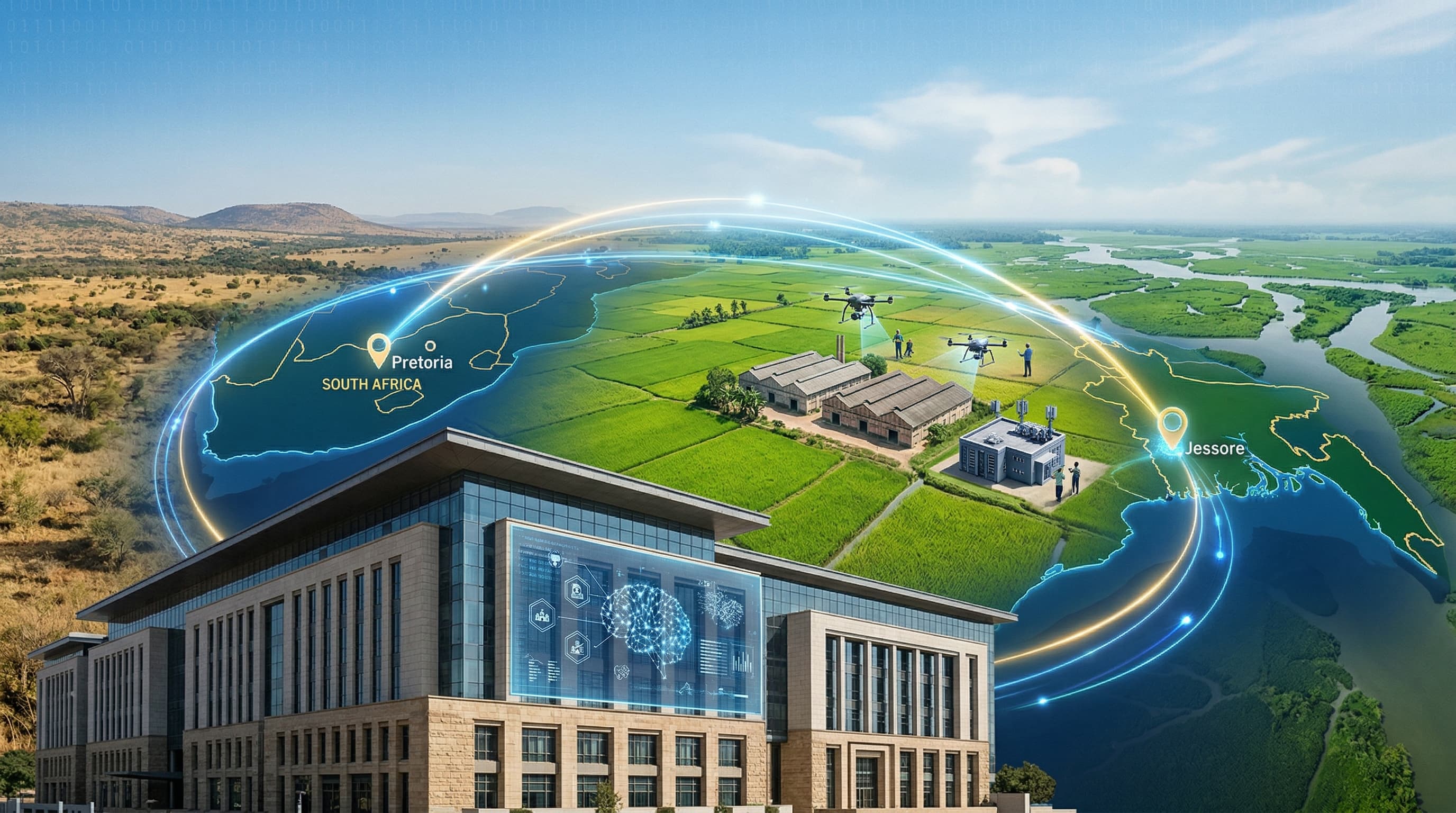
South Africa released its AI policy draft on April 11, 2026, proposing an AI Governance Council, National AI Institute, and tax incentives. Bangladesh tech leaders see it as a blueprint for growth in agriculture, garments, and fintech.
The policy targets AI startups investing over 10 million ZAR ($550,000 USD). South Africa aims to train 50,000 workers by 2030, per the draft document.
Bangladesh invests $200 million USD (৳2,400 crore BDT) annually in digital parks, reports the Bangladesh Hi-Tech Park Authority (BHTPA). Jessore's AI hubs in farming stand to gain from similar incentives.
Key Features of South Africa AI Policy
South Africa's draft establishes the AI Governance Council. This body enforces ethical standards and data privacy. Minister Blade Nzimande states it adapts EU AI Act principles to African contexts.
The National AI Institute leads research with 500 million ZAR ($27.5 million USD) seed funding. It partners with universities on machine learning for mining and healthcare.
Incentives offer 150% tax deductions for R&D. Startups qualify by employing locals and using local data centers. Government economists project 2% GDP growth from AI by 2035.
Bangladesh Tech Development Relevance
Bangladesh exported $50 billion USD (৳5.9 lakh crore BDT equivalent at market rates) in garments in 2025, per Bangladesh Garment Manufacturers and Exporters Association (BGMEA). AI cuts supply chain waste by 15%.
Jessore farmers deploy AI drones for rice yields. Startups boosted output 20% via predictive analytics, reports Jessore University of Science and Technology (JUST).
Bangladesh lacks a unified AI body. The draft's skills focus matches ICT Ministry goals to upskill 1 million youth by 2028.
AI Institutions Bangladesh Can Emulate
South Africa's AI Institute sets a model. Bangladesh's a2i program coordinates digital efforts but needs AI focus. A Dhaka-based institute could drive innovation for homeland and diaspora investors.
The council promotes safety. Bangladesh saw deepfake incidents rise 30% in 2025, per Cyber Security Agency. Oversight prevents misuse in elections and finance.
South Africa ties funding to jobs. Bangladesh provides 10-year tax holidays in hi-tech parks, per BHTPA. AI-specific grants would expand this for remittance-funded startups.
Economic Incentives and Fintech Ties
Tax breaks accelerate growth. South African firms depreciate AI hardware faster. Bangladesh importers face 15% GPU duties; reforms could reduce them, per National Board of Revenue (NBR).
Venture capital surges. South Africa's policy eyes $1 billion USD in AI investments by 2028. Bangladesh drew $300 million USD in tech VC in 2025, per Bangladesh Venture Capital Association.
Dhaka banks use AI for fraud detection, cutting losses 25%, similar to South African Reserve Bank reports. bKash and Nagad integrate AI chatbots in the $2 billion USD (৳24,000 crore BDT) fintech sector.
Remittances hit $22 billion USD (৳2.6 lakh crore BDT) in 2025, per Bangladesh Bank. AI optimizes cross-border flows via blockchain integrations, aiding diaspora in UK and US.
Lessons for Jessore Agrotech and Rural Areas
Jessore pioneers agrotech. AI satellites monitor soil health. South Africa's drought prediction tools suit Khulna division needs.
Rural gaps remain. Bangladesh reaches 95% 4G coverage, per Bangladesh Telecommunication Regulatory Commission (BTRC). AI demands fiber optics expansion to connect rural farmers and urban diaspora networks.
Diaspora remittances from UK-based Jessore natives fund startups. Policy clarity draws more capital, like South Africa's $2 billion USD annual inflows.
Path Forward for Bangladesh AI Incentives
ICT State Minister Zunaid Ahmed Palak praised the South Africa AI policy draft on April 11, 2026. Policymakers convene next week for consultations.
Grameenphone and bKash test AI tools. Government incentives like South Africa's will scale them nationwide.
Jessore AI meetups discuss these blueprints. Bangladesh positions itself for tech-led prosperity serving homeland readers in Jessore and diaspora in Jackson Heights.