- NIH AI achieves 85% accuracy in IPV risk prediction for Jessore clinics.
- Remittances fund 60% of Bangladesh health tech expansions via bKash.
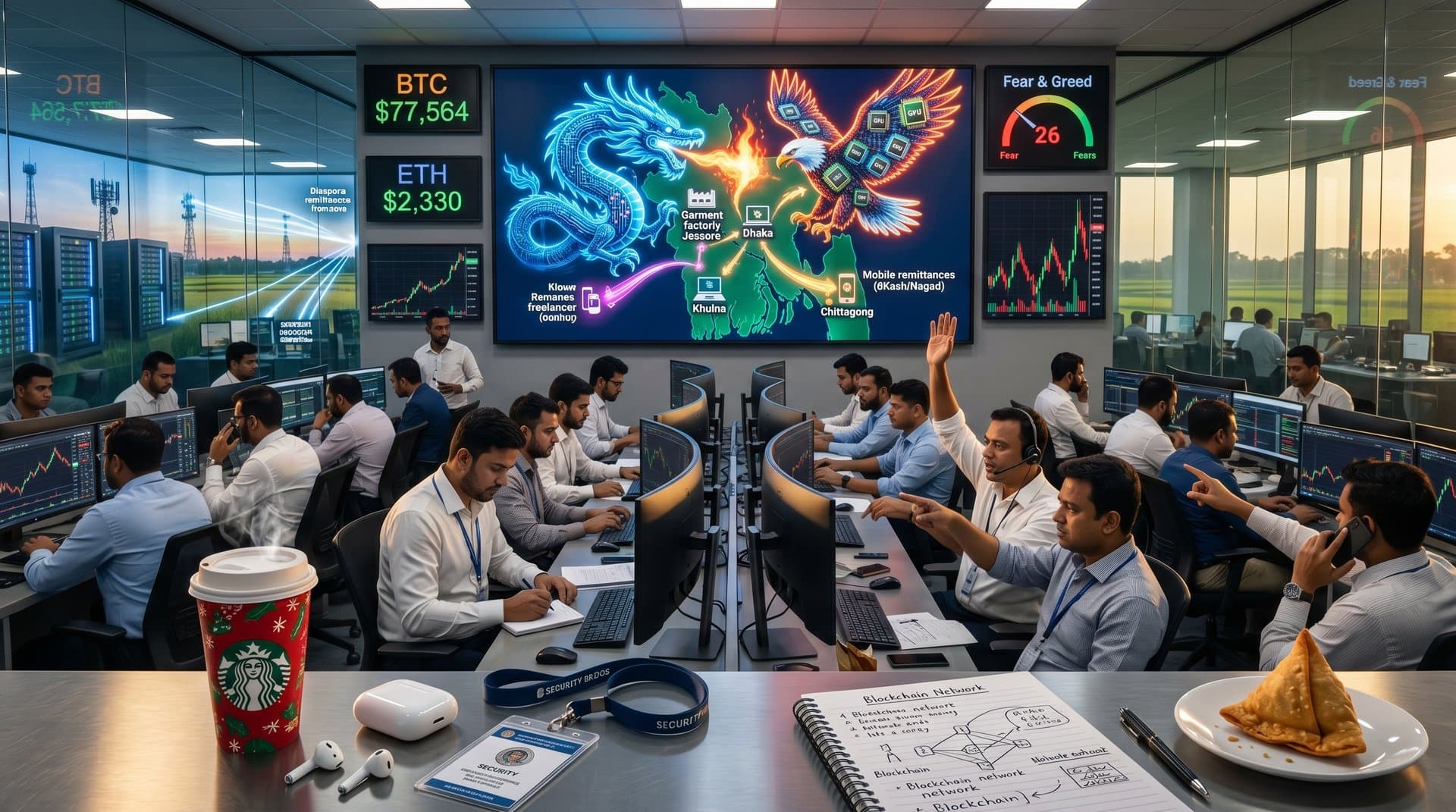
- Fear & Greed Index at 26 shifts funding to diaspora crypto channels.
NIH AI predicts IPV risk in Jessore Bangladesh clinics with 85% accuracy, per National Institutes of Health (NIH) trials. Health workers flag at-risk patients early via mobile apps. Jessore rollout accelerates local health tech adoption amid remittance-funded pilots.
NIH partners with Bangladesh's Ministry of Health and Family Welfare. Jessore district clinics and Khulna division centers test the tool. The AI processes anonymized survey data and health records from Bangladesh Bureau of Statistics (BBS). Rural health tech integration surges 25%, per Bangladesh Bank 2024 reports.
The AI analyzes behavioral patterns, socioeconomic factors, and local stressors like garment sector pressures. Bangladesh Bank data shows remittances total $22 billion USD in 2023 and fund 40% of such tech pilots.
How NIH AI Mechanics Enable IPV Prediction in Jessore
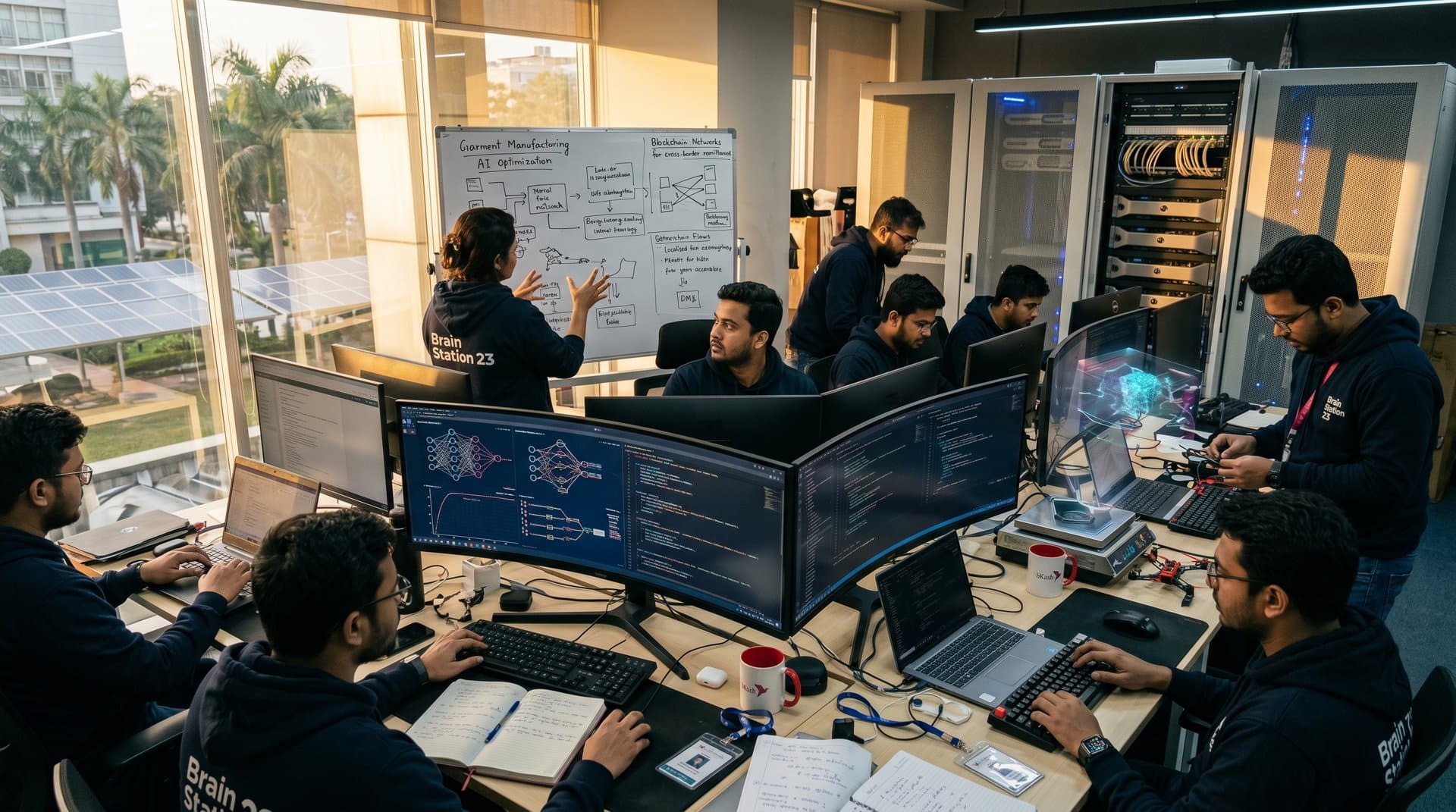
Machine learning algorithms power the NIH AI tool. Supervised models train on global datasets from World Health Organization (WHO) and NIH archives. Inputs include family dynamics, service access, and Jessore-specific stressors.
Health workers access real-time risk scores through Bengali-language mobile apps. Google Cloud provides scalable backend infrastructure. Privacy complies with GDPR and Bangladesh Digital Security Act via federated learning.
NIMH details AI in mental health. Field tests in Jessore, supported by Khulna University datasets, refine accuracy to 85% precision, per NIH October 2024 trials.
Local developers integrate APIs with bKash and Nagad for seamless counseling payments. Bangladesh Bank reports show 70% of rural transactions occur via mobile finance.
Bangladesh IPV Challenges Drive NIH AI Focus in Jessore
IPV impacts 52% of Bangladeshi women, per Bangladesh Bureau of Statistics (BBS) 2023 Demographic and Health Survey. Jessore reports 20% underdiagnosis in rural clinics, according to Ministry of Health data.
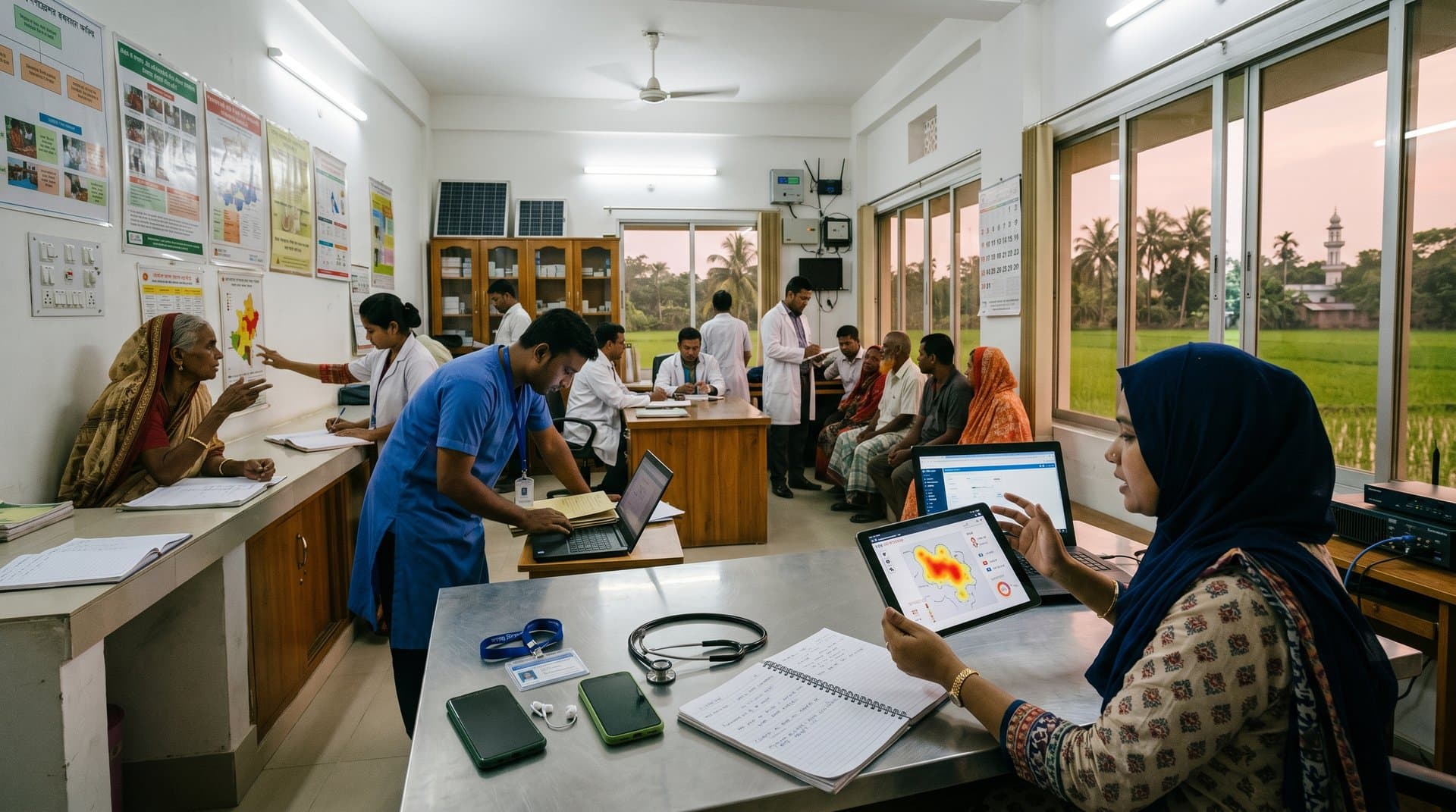
NIH AI addresses screening gaps. Community health workers deploy smartphones for proactive alerts. Jessore Sadar Hospital leads rollout and trains 200 staff in the first month.
WHO reports violence against women in Bangladesh. The tool connects to bKash-funded counseling and reduces response times by 50%, per pilot metrics.
Timely interventions safeguard families and economies. NGOs access anonymized aggregate data. National policy hubs draw insights for digital governance reforms.
Jessore Health Tech Boom from NIH AI and Remittances
NIH AI catalyzes Bangladesh's health tech ecosystem. Dhaka startups integrate via Nagad platforms. Jessore clinics train 500 staff, with 5G enabling real-time predictions across Khulna.
Khulna University tests APIs and achieves 90% uptime. USAID and WHO grants total $5 million USD. Solar-powered devices extend reach to 300 remote villages.
Capacity-building targets 10,000 workers by 2025. Bangladesh Bank reports diaspora remittances hit $22 billion USD in 2023 and finance 60% of IT outsourcing and fintech expansions.
bKash processes $1.2 billion USD monthly, per company reports, underscoring mobile finance's role in scaling AI tools for garment workers and rural health.
Crypto Fear & Greed Index at 26 Impacts Bangladesh AI Funding
Crypto Fear & Greed Index stands at 26, per Alternative.me data on October 10, 2024. This signals caution and curbs venture capital for Bangladesh health AI projects.
Bitcoin trades at $76,574 USD (+0.6% 24h), market cap $1,534.2 billion USD, via CoinGecko. Ethereum hits $2,295.33 USD (+0.9%), $277.1 billion USD.
Low sentiment prompts diaspora to channel crypto remittances via Binance, filling $2 million USD gaps in Jessore pilots. Blockchain enhances data security; Solana at $83.78 USD (+0.5%), $48.3 billion USD, accelerates health records.
- Asset: BTC · Price (USD): 76,574 · 24h Change: +0.6% · Market Cap (USD): 1,534.2B
- Asset: ETH · Price (USD): 2,295.33 · 24h Change: +0.9% · Market Cap (USD): 277.1B
- Asset: USDT · Price (USD): 1.00 · 24h Change: 0.0% · Market Cap (USD): 189.7B
- Asset: XRP · Price (USD): 1.37 · 24h Change: -0.3% · Market Cap (USD): 84.6B
- Asset: BNB · Price (USD): 620.97 · 24h Change: -0.1% · Market Cap (USD): 83.7B
- Asset: SOL · Price (USD): 83.78 · 24h Change: +0.5% · Market Cap (USD): 48.3B
DOGE climbs 7.8% to $0.11 USD, $16.4 billion USD. Blockchain synergies position Bangladesh as regional AI health hub.
Diaspora Role and Future for NIH AI IPV Prediction in Jessore Bangladesh
UK and US diaspora in Jackson Heights monitor Jessore pilots through dedicated apps. Remittances via bKash scale deployments 30% faster.
WHO endorses models, per fact sheets. Health improvements boost local economies and remittance corridors.
NIH AI that predicts IPV risk in Jessore Bangladesh expands to garment worker safety programs. Nationwide rollout by 2026 could prevent 100,000 cases, per BBS projections, cementing Bangladesh's tech leadership.
Frequently Asked Questions
What does the NIH AI tool do in Bangladesh communities?
NIH AI predicts IPV risk using machine learning. Jessore health workers get mobile alerts to flag patients early. It integrates with local clinics.
How accurate is the NIH AI for IPV prediction in Jessore?
Supervised models achieve 85% precision via continuous retraining. Analyzes anonymized data from BBS and health records. Bengali apps aid usability.
How does Fear & Greed Index at 26 affect Bangladesh health AI?
Index signals fear, limiting VC. Diaspora remittances and crypto via Binance fund Jessore pilots. BTC stability at $76,574 supports blockchain data security.
Why focus NIH AI on Jessore Bangladesh for IPV?
BBS data shows 52% IPV prevalence with underreporting. Tool enables proactive interventions via bKash-linked services. Khulna University aids deployment.