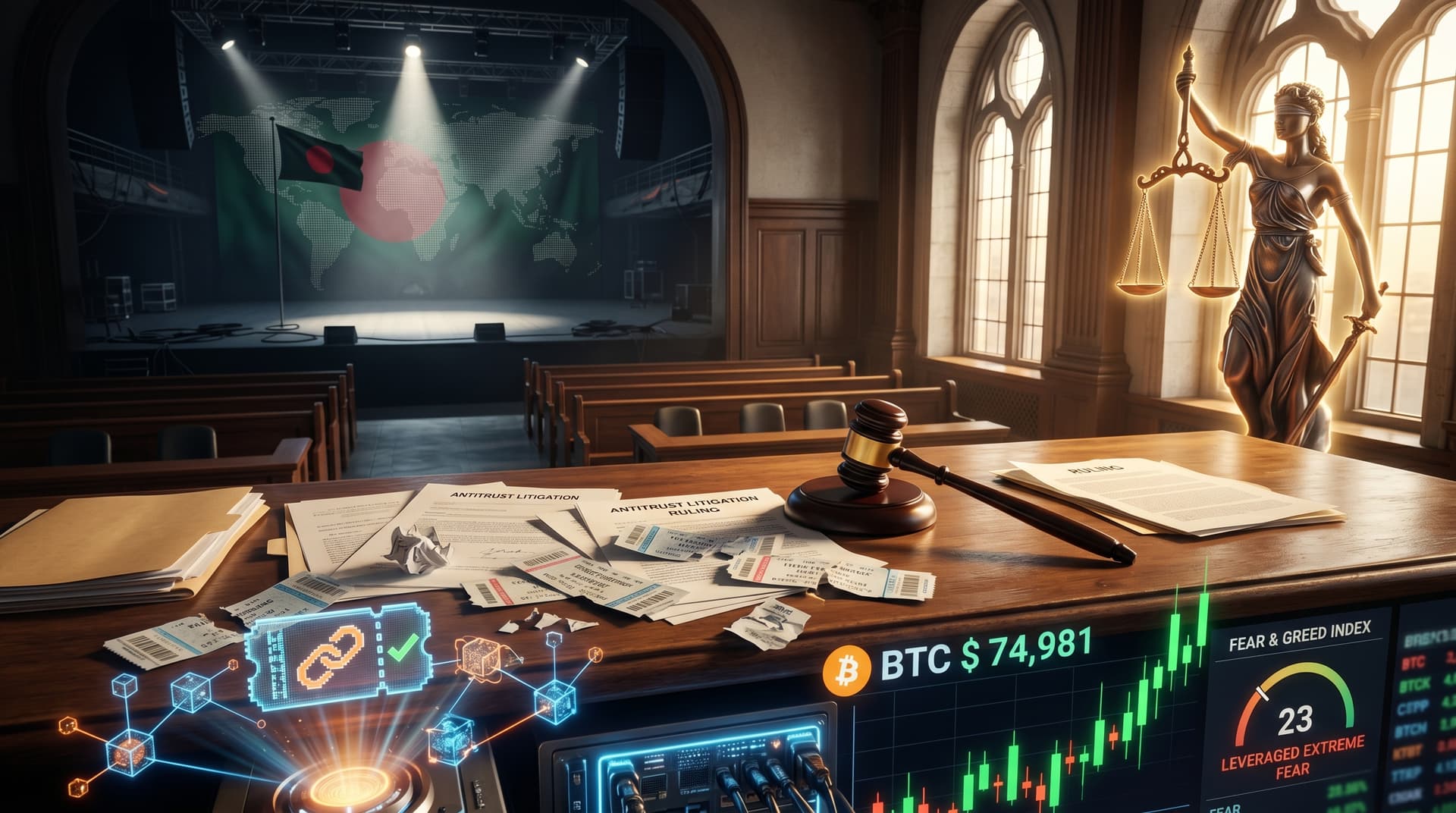
- U.S. jury convicts Live Nation of 80% ticketing monopoly on April 16, 2026.
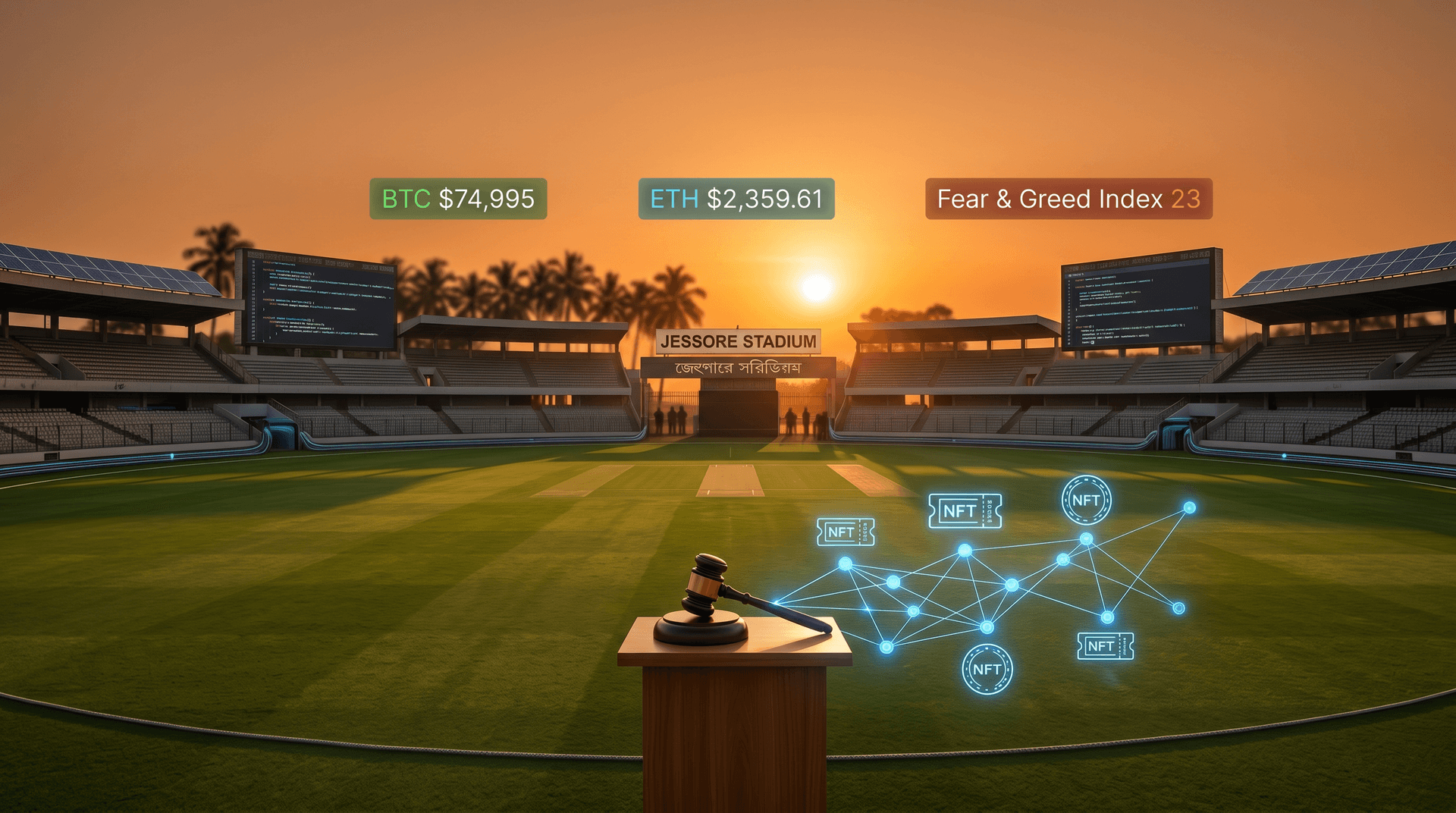
- Crypto Fear & Greed Index drops to 23 as BTC rises 1.0% to $74,981.
- DOJ eyes divestitures; blockchain cuts fees to 10% for Bangladeshi events.
A U.S. federal jury delivered the Live Nation antitrust ruling on April 16, 2026. The New York court found Live Nation guilty of monopolizing 80% of primary ticketing through Ticketmaster. The Department of Justice secured victory after proving exclusive deals hiked prices 30%.
The verdict challenges Live Nation's dominance in venues, promotion, and artist management.
DOJ Proves Live Nation's Ticketing Monopoly Practices
Jurors deliberated two days before the guilty verdict. The case exposed failures in 2010 merger safeguards.
The Department of Justice states Live Nation controls primary ticketing at over 80% of major U.S. venues. It also handles promotion for 70% of top-grossing artists.
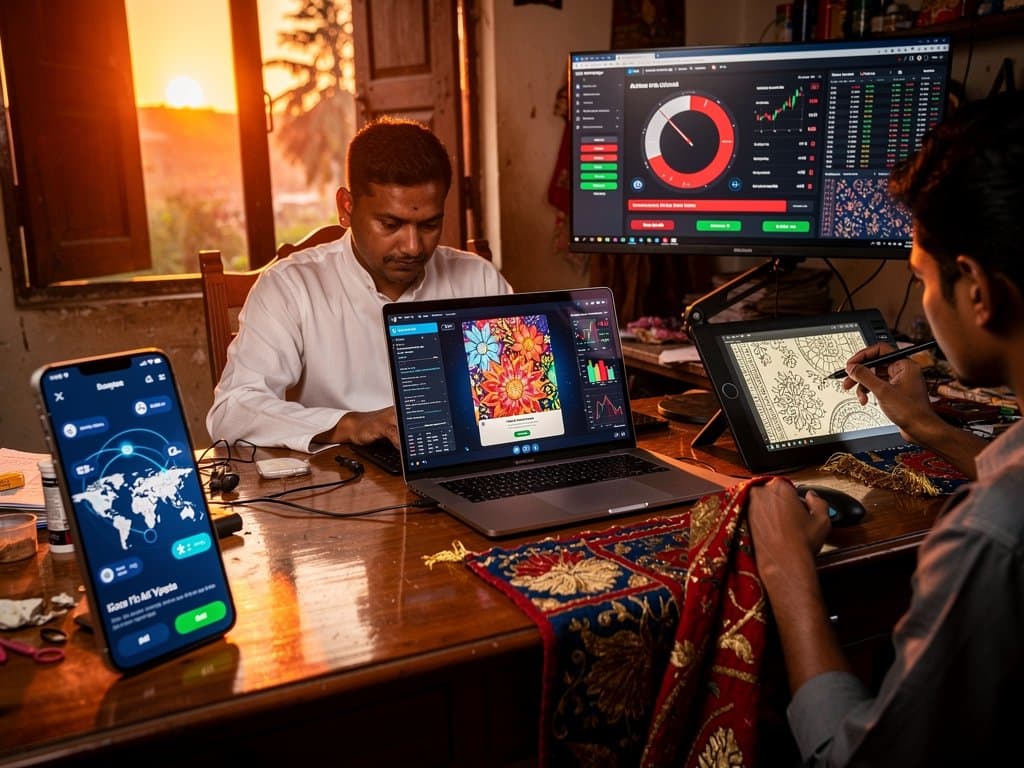
Bangladeshi diaspora in Jackson Heights pay inflated fees for Diljit Dosanjh concerts. Jessore residents face similar costs at cricket matches and festivals via imported ticketing tech.
Entertainment Finance Shifts as 30% Fees Face Scrutiny
DOJ evidence shows Live Nation fees exceed 30% of face value from venue contracts. Service charges average $25 per $100 ticket.
Courts consider remedies like divesting 500+ venues or promoter units. Investors sold Live Nation shares 12% post-verdict.
SeatGeek and StubHub intensify competition with dynamic pricing. Bangladesh's bKash tests low-fee models for local events.
Blockchain Ticketing Emerges to Counter Monopoly
Blockchain platforms mint NFT tickets on Ethereum and Polygon. Smart contracts manage sales, transfers, and royalties at 5-10% fees.
Scalpers fail against on-chain verification. Fans resell at market rates without 20% markups.
Ethereum traded at $2,353.79, up 1.0%, per CoinGecko. GET Protocol and TicketFairy power 50+ events with NFTs.
Dhaka startup ChainFest pilots blockchain for Pohela Boishakh. Jessore developers fund via diaspora remittances, with BIDA reporting $1.4 billion IT exports in FY2025.
Crypto Markets React Cautiously to Antitrust Verdict
Crypto Fear & Greed Index dropped to 23, per Alternative.me.
Bitcoin rose 1.0% to $74,981, via CoinGecko. XRP jumped 3.3% to $1.40; BNB gained 1.3% to $623.69.
Antitrust shifts speed crypto in entertainment. OpenSea lists 10,000+ event NFTs with DeFi yields.
Bangladesh Bank reports remittances at $22.1 billion in FY2023, 15% to digital entertainment via USDT.
Bangladesh Entertainment Sector Gains from Global Reforms
The ruling aids Bangladesh's concert market. Khulna garment workers earning BDT 12,000 monthly seek cheap tickets for Miles band shows.
Jessore cricket events charge 20% premiums via exclusive agents. Nagad digital ticketing cuts to 8%.
Bangladesh Bureau of Statistics (BBS) notes household entertainment spending up 18% to BDT 450 billion in 2025.
London and Toronto diaspora remit BDT 500 crore yearly for festivals, now using blockchain.
DOJ Remedies Target Structural Changes
DOJ seeks divestiture of 200 amphitheaters and promoter lock-in bans. Live Nation plans Supreme Court appeals.
Binance Pay offers instant USDT at $1.00 parity. Dhaka promoters adopt rivals' open APIs.
BIDA reports 250+ fintech startups with $150 million blockchain funding last year.
Artists Benefit from Direct Revenue Streams
Artists connect fans via Web3. Smart contracts deliver 70/30 artist-fan royalties.
Demand pricing boosts top acts. Taylor Swift tests NFT presales.
Jessore artists add bKash QR to digital mela tickets.
Tech-Finance Fusion Drives Ticketing Future
The Live Nation antitrust ruling accelerates hybrid ticketing. Ethereum layer-2 handles 100,000 tickets per second at zero gas fees.
Bangladesh IT/ITES employs 500,000, exporting $1.9 billion in blockchain services per BASIS 2026.
Diaspora remittances power Web3 events in Sylhet. Competitive ticketing cuts costs 25%, growing the industry.
This article was generated with AI assistance and reviewed by automated editorial systems.