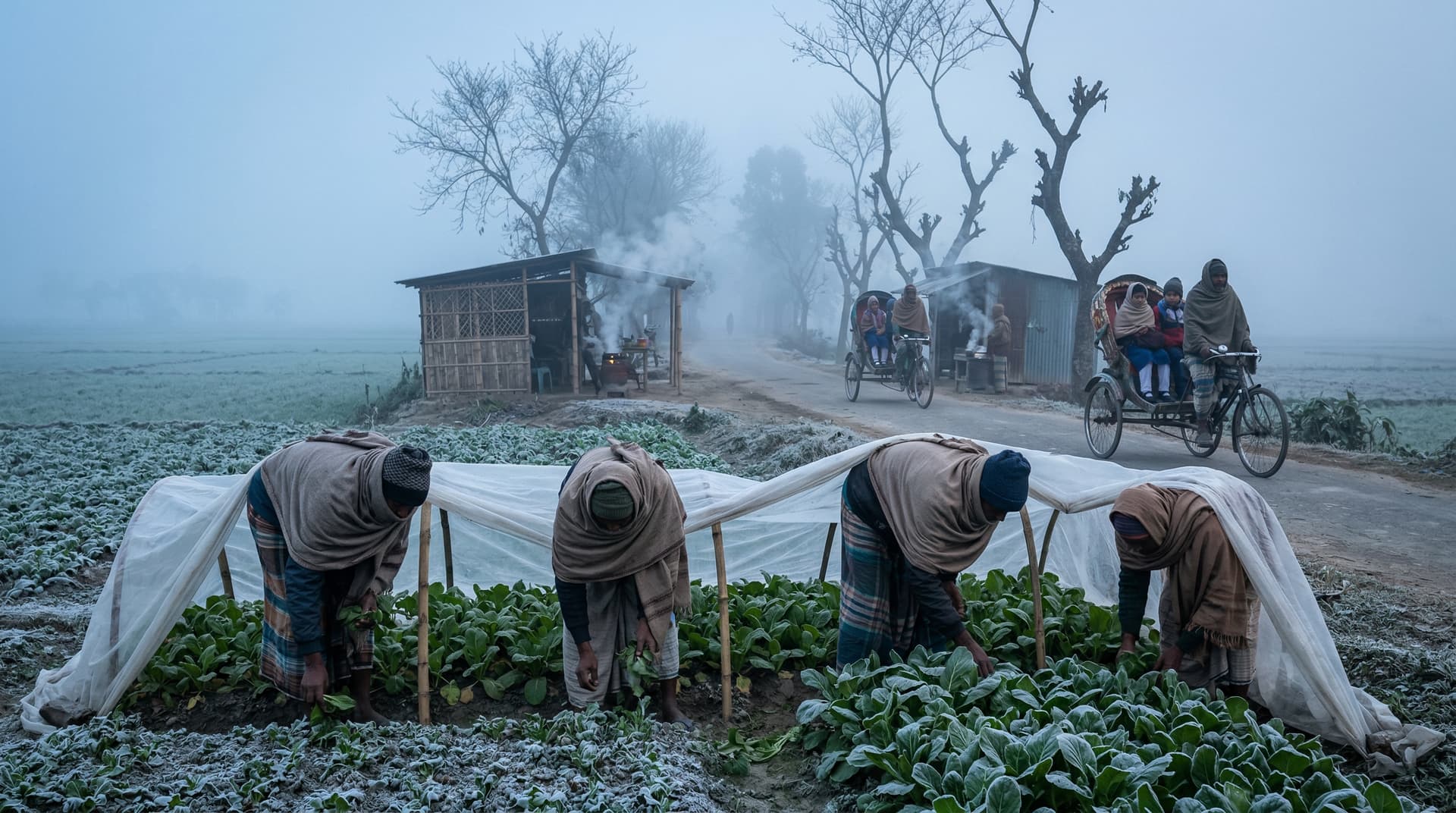
Jessore, February 12, 2024 – The residents of Jessore district are battling one of the harshest cold waves in recent years, as mercury levels dipped to a chilling 8 degrees Celsius early this morning. The Bangladesh Meteorological Department (BMD) has confirmed that this nor'wester-induced cold spell, sweeping across the Khulna division, is set to continue until at least February 14, bringing dense fog, low visibility, and biting winds that have paralyzed normal activities.
Unprecedented Chill Grips the District
Jessore, known for its lush farmlands and bustling markets, has transformed into a foggy, frost-kissed landscape. According to BMD's latest bulletin, the minimum temperature recorded at Jessore airport was 8.2°C at dawn, the lowest in the past week. Night temperatures have hovered around 10°C, while daytime highs struggle to cross 22°C. Dense fog has blanketed the district since February 9, reducing visibility to under 100 meters on major highways like the Jessore-Khulna road, leading to multiple minor accidents.
Local farmer Abdul Hossain from Keshabpur upazila shared his ordeal: "Our crops are suffering. Potato fields are frosting over, and vegetable saplings are wilting. We've covered them with polythene, but the damage is done." Agriculture officials estimate losses in the lakhs for winter vegetables like cauliflower, cabbage, and spinach, which are staples in Jessore's economy.
Impact on Daily Life and Vulnerable Groups
Schools and madrasas across Jessore have been advised to adjust timings or declare holidays for primary students. In Manirampur and Abhoynagar upazilas, classes started late at 10 AM to avoid the morning chill. Parents are seen wrapping children in multiple layers of shawls and mufflers as they head to school.
Hospitals report a surge in cold-related ailments. Jessore General Hospital's emergency ward is overwhelmed with cases of pneumonia, bronchitis, and hypothermia, particularly among the elderly and infants. Dr. Rezaul Karim, a senior physician, noted, "We've seen over 200 patients daily since February 10. Most are from rural areas without proper heating. We're distributing warm clothes and advising bonfires with caution."
Street vendors and rickshaw pullers are the worst hit. At Jessore's main Chawrasta, tea stalls are packed as people huddle around coal braziers. "Business is down 50%," lamented a vendor. "No one wants cold snacks; everyone craves hot tea and singara."
Government Response and Relief Efforts
The district administration has swung into action. Jessore Deputy Commissioner Md. Mizanur Rahman held an emergency meeting on February 11, directing upazila nirbahi officers to distribute blankets, warm clothes, and dry food to 5,000 homeless and low-income families. Relief camps have been set up in Manirampur and Jhikargacha, providing shelter and hot meals.
The Department of Agricultural Extension (DAE) has urged farmers to use smoke fumigation and thatched covers for crops. "We've mobilized 50 extension agents to visit fields," said DAE Director Shahidul Islam. Fire Service and Civil Defence teams are on high alert for uncontrolled bonfires, which pose fire risks in dry conditions.
Nationally, the cold wave is part of a larger weather pattern affecting northern and western Bangladesh, triggered by a western disturbance from the Himalayas. BMD Director for Jessore region, forecasting specialist Nazrul Islam, explained, "Moist winds from the Bay of Bengal clashing with dry northerly winds are intensifying the cold. Improvement expected post-February 14 with rising temperatures."
Historical Context and Climate Patterns
Jessore has a history of severe winters. The last comparable cold wave was in January 2023, when temperatures fell to 6.5°C, causing widespread crop failure. Climate experts attribute these extremes to climate change, with erratic monsoons and prolonged dry spells leading to sharper winters.
Data from BMD shows Jessore's average February minimum is 13°C, making this spell 5°C below normal. Over the past decade, cold wave frequency has increased by 20%, impacting the region's USD 200 million vegetable export industry to Kolkata and beyond.
| Date | Min Temp (°C) | Max Temp (°C) | Visibility (km) | |------------|---------------|---------------|-----------------| | Feb 9 | 9.5 | 21.0 | 0.2 | | Feb 10 | 8.8 | 20.5 | 0.1 | | Feb 11 | 8.5 | 22.2 | 0.15 | | Feb 12 | 8.2 | 23.0 (est.) | 0.1 |
Community Resilience and Tips for Survival
Amid the adversity, Jessore's spirit shines. Community kitchens in mosques and clubs are serving free khichuri. Social organizations like Rotary Club Jessore have donated 2,000 blankets sourced locally.
Health experts recommend:
- Wearing multiple layers of clothing.
- Consuming hot, nutritious food like ginger tea and dates.
- Avoiding open fires indoors to prevent carbon monoxide poisoning.
- Keeping infants warm and hydrated.
Motorists are advised to use fog lights and maintain distance on roads. The district traffic police have increased patrols.
Looking Ahead
As Jessore endures this frosty trial, hope lies in the impending thaw. BMD forecasts partial improvement by February 15, with temperatures climbing to 25°C. But for now, the district remains wrapped in winter's grip, a stark reminder of nature's power.
Residents are urged to stay tuned to local radio and BMD apps for updates. Jessore News 24 will continue monitoring the situation.
(Word count: 912)