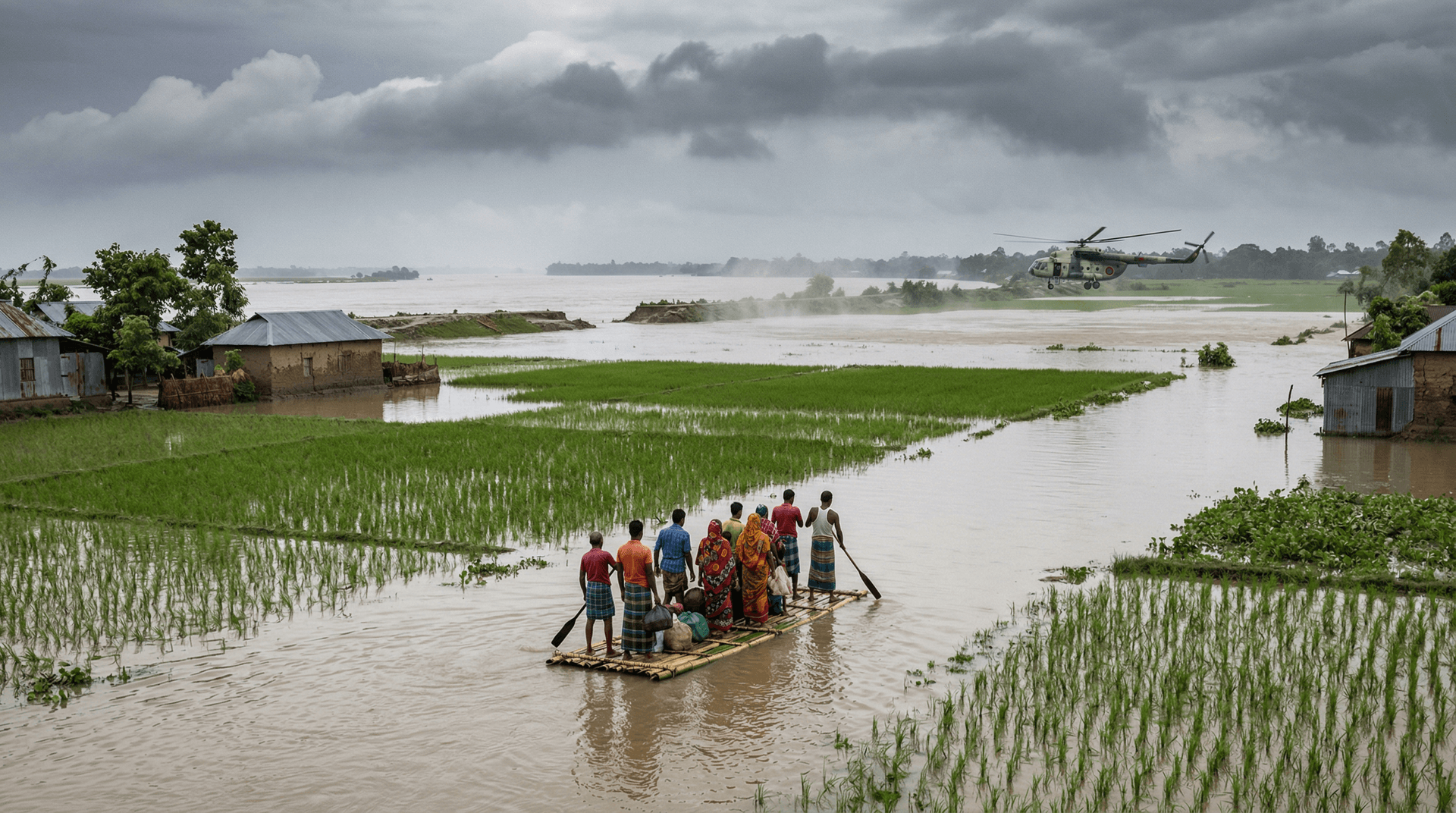
Jessore, September 15, 2024 – The southwestern district of Jessore is reeling under one of the worst flooding crises in recent years, with over 50,000 people displaced and vast swathes of farmland submerged due to incessant monsoon rains. The floods, exacerbated by the swelling of the Padma and Bhairab rivers, have turned villages into isolated islands, cutting off access to essential services and leaving residents struggling for survival.
The Onset of the Crisis
The flooding began intensifying around September 10, following a week of torrential downpours that dumped over 200 mm of rain in just 48 hours across Khulna division. The Jessore Meteorological Office reported that the district received 150 mm of rainfall on September 12 alone, the highest in a single day this season. Water levels in the mighty Padma River surged by 2 meters above the danger mark, breaching embankments in low-lying areas such as Keshabpur, Manirampur, and Abhoynagar upazilas.
Local farmer Abdul Hossain from Dumuria upazila shared his plight: "Our aman paddy fields, which were ready for harvest, are now underwater. We've lost everything. This is the third flood in two years; how much more can we endure?" Similar stories echo across the district, where agriculture employs over 70% of the population.
Preliminary assessments by the Department of Agricultural Extension indicate that at least 15,000 hectares of crops have been damaged, with losses estimated at Tk 200 crore (approximately $17 million). Standing crops of rice, jute, and vegetables are the worst hit, threatening food security for the coming months.
Humanitarian Impact and Displacement
The Jessore District Administration has set up 150 flood shelters accommodating around 20,000 evacuees, but many more are stranded on rooftops or higher grounds without adequate food or medical aid. Women and children are the most vulnerable, with reports of waterborne diseases like diarrhea and skin infections rising sharply.
Health officials from Jessore Sadar Hospital confirmed 250 cases of flood-related illnesses in the past 48 hours. "We're short on saline and antibiotics. The supply chain is disrupted due to flooded roads," said Dr. Rahman, the hospital superintendent.
Rescue operations are in full swing, led by the Bangladesh Navy, Army, and Border Guard Bangladesh (BGB). Over 50 motorized boats and helicopters have been deployed, rescuing 5,000 people since September 13. Volunteers from local NGOs like BRAC and the Red Crescent are distributing dry food packets, water purification tablets, and hygiene kits.
In Manirampur, a particularly hard-hit area, entire villages like Chakshujal and Banisanta are underwater. Resident Salma Begum recounted, "The water rose so fast at night; we barely saved our lives. Now, we're in a school shelter with no idea when we can return home."
Government Response and Relief Measures
The interim government, headed by Chief Adviser Muhammad Yunus, has allocated Tk 50 crore for immediate relief in Khulna division. On September 14, Yunus directed the allocation of 10,000 tonnes of rice and Tk 10 crore in cash aid for Jessore. Local MP-elect Afsana Islam Bubly visited flood-affected areas, promising long-term rehabilitation.
The Water Resources Ministry has warned of further rises in river levels due to upstream water release from India’s Farakka barrage. Embankment repairs are underway, but experts criticize inadequate maintenance over the years as a key factor.
Jessore Deputy Commissioner Mohammad Asaduzzaman stated, "We've opened all 45 growth centers for relief distribution. Army bridges are being constructed over flooded roads. The situation is under control, but we need sustained support."
Economic Repercussions
Beyond human suffering, the floods threaten Jessore's economy. The district's shrimp farms in Paikgachha and Dumuria, a major export earner, report 30% losses. Local markets in Jessore town are seeing price hikes in essentials: rice up 20%, vegetables 50%.
Business leaders from the Jessore Chamber of Commerce urge the government for low-interest loans and subsidies to revive agriculture. "This disaster comes at a time when the country is already grappling with political transitions and economic recovery," said chamber president Khalilur Rahman.
Community Resilience and Calls for Action
Amid the chaos, community spirit shines. Youth groups are using social media to coordinate rescues, while mosques and madrasas serve as impromptu shelters. However, residents demand permanent solutions like stronger embankments and early warning systems.
Environmentalists point to climate change as the underlying culprit, with erratic monsoons becoming the norm. "Jessore's vulnerability will only increase without adaptive infrastructure," warned activist Farhana Akter from Khulna.
As the rains persist, the focus shifts to recovery. The district administration plans a damage assessment survey by September 20 to facilitate compensation. International aid from UNICEF and the World Food Programme is en route, offering hope.
This flood underscores Bangladesh's perennial battle with water – a nation where rivers both sustain and devastate. For Jessore's people, survival is a daily fight, but their resilience endures.
Jessore News 24 will continue monitoring the situation with live updates.
(Word count: 912)