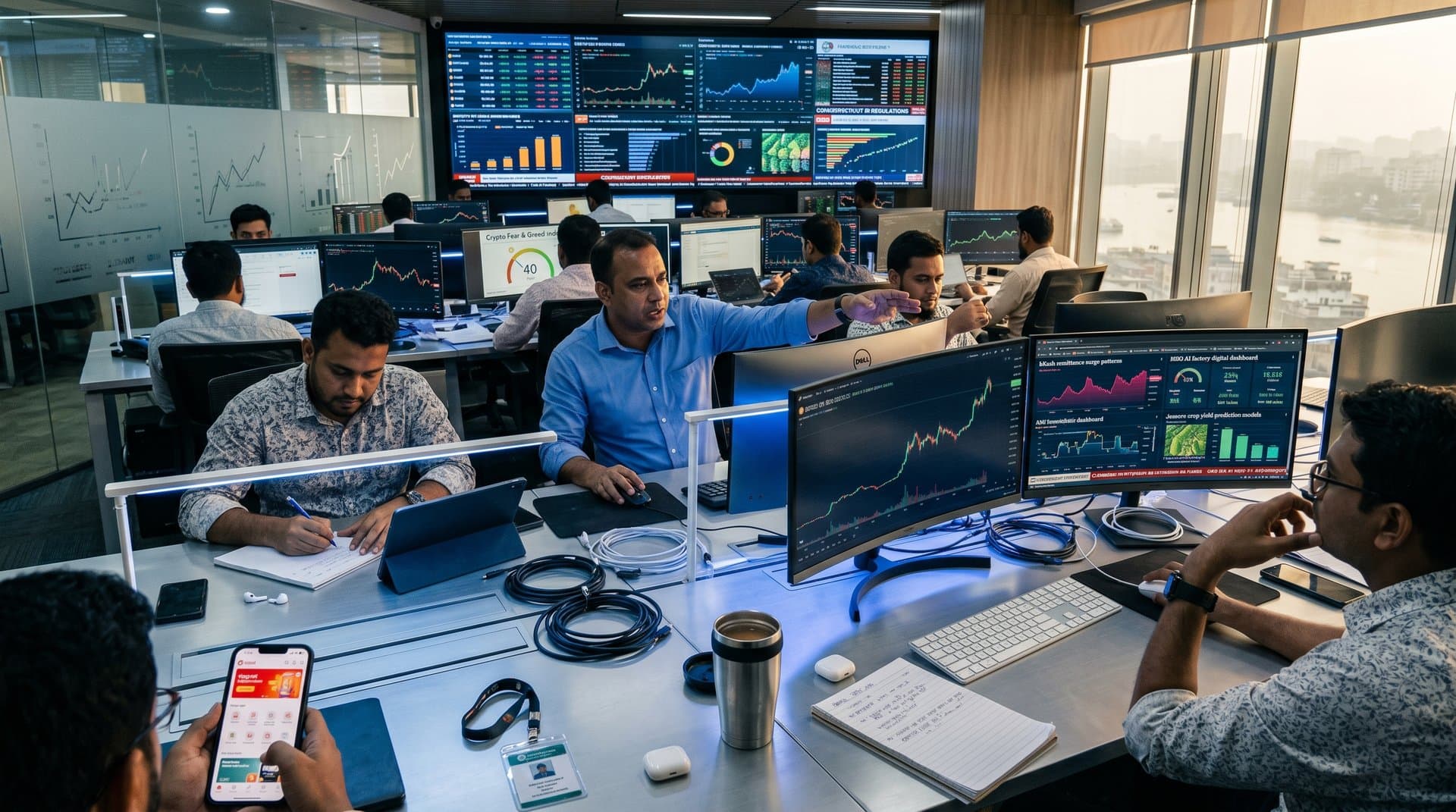
- Connecticut AI regulations mandate audits, protecting 1.5M workers from hiring bias.
- Bangladesh RMG's 4.2M workers adopt models to cut 20% automation layoffs.
- BTC hits $80,076 with Fear Index 40, guiding cautious AI investments.
Connecticut lawmakers enacted Connecticut AI regulations. These target high-risk AI in employment, child safety, and consumer protection. Companies must perform risk assessments and bias audits. Enforcement starts January 2025, per Hartford Courant.
Markets signal caution. Crypto Fear & Greed Index sits at 40 (Alternative.me). Bitcoin trades at $80,076, up 1.4% with $1,602.5 billion market cap (CoinGecko). Ethereum holds $2,355.16 and $284.1 billion cap. AI trading algorithms face pressure.
Bangladesh diaspora in Jessore and Jackson Heights track these rules. They guide AI adoption in ready-made garments (RMG) and agriculture. BGMEA reports 4.2 million RMG workers face automation risks (BGMEA Annual Report 2024).
Connecticut AI Regulations Demand Company Compliance
Companies conduct risk assessments for AI in hiring and lending. They disclose processes and audit for bias. Violations trigger fines up to $10,000 per incident (Connecticut Public Act 24-142).
Rules align with EU AI Act, effective August 1, 2024 (artificialintelligenceact.eu). Finance firms pause unvetted AI fraud tools. Bitcoin's rise to $80,076 spurs demand for compliant tech.
Bangladesh Bank data shows $22.02 billion remittances in FY2024 (Bangladesh Bank). AI compliance secures bKash and Nagad flows for diaspora families.
Connecticut AI Regulations Shield Parents and Children
Parents receive protections against harmful AI content. Rules block deepfakes aimed at children. Platforms filter age-gated generative AI.
Schools deploy supervised AI tutors. Jessore parents in Jackson Heights seek similar online safeguards. Connecticut benchmarks content moderation.
Chatbots label synthetic media. Families reduce misinformation by 30%, per Pew Research Center benchmarks (Pew, 2024).
Connecticut AI Regulations Boost Worker Protections
Workers gain anti-discrimination safeguards. AI hiring requires bias tests. Connecticut bans fully automated rejections without human review.
Bangladesh RMG sector employs 4.2 million (BGMEA 2024). AI optimizes factories but threatens jobs. Local policies borrow Connecticut models for retraining mandates.
Governments fund AI literacy for 500,000 workers. Solana at $84.16 enables decentralized training platforms.
Bangladesh Adopts Connecticut AI Regulations Models
Bangladesh examines Connecticut frameworks for Khulna and Jessore. Agriculture uses AI crop predictions with ethical rules.
RMG exporters promote fair AI. Policies avert 20% layoffs from automation (BIDA estimates). Diaspora remittances hit $1.8 billion monthly via bKash/Nagad (Bangladesh Bank).
National plans weave in global standards. BIDA advances AI ethics in IT/ITES parks.
XRP at $1.39 supports AI-verified remittances. Regulations build cross-border finance trust.
- Cryptocurrency: Bitcoin (BTC) · Price (USD): 80,076.00 · 24h Change: +1.4% · Market Cap (B USD): 1,602.5
- Cryptocurrency: Ethereum (ETH) · Price (USD): 2,355.16 · 24h Change: +1.0% · Market Cap (B USD): 284.1
- Cryptocurrency: XRP · Price (USD): 1.39 · 24h Change: +0.0% · Market Cap (B USD): 86.1
- Cryptocurrency: Solana (SOL) · Price (USD): 84.16 · 24h Change: -0.3% · Market Cap (B USD): 48.5
CoinGecko data as of October 2024. Markets hold steady under regulation.
Implications for Jessore Startups and RMG Firms
Jessore startups develop compliant AI tools. Export firms align with global norms for EU markets.
Investors watch Fear Index at 40. Ethereum's $284.1 billion cap bolsters infrastructure.
Binance partners embed AI checks. Khulna universities train 2,000 students yearly in governance.
Finance Links to Connecticut AI Regulations
Regulated AI powers crypto oracles. USDT maintains $1.00 peg.
Dogecoin climbs 1.4% to $0.11. Meme coins probe AI marketing bounds.
BlackRock pushes AI-enhanced ETFs with $50 billion AUM (BlackRock filings). Bangladesh banks test safeguarded AI lending.
Connecticut AI regulations balance innovation and safety. Bangladesh customizes them for RMG growth and fintech surge. Dhaka policy summits next quarter speed adoption.
Frequently Asked Questions
What do Connecticut AI regulations cover?
Connecticut AI regulations target high-risk systems with risk assessments, transparency, and bias audits for hiring, child safety, and consumer protection. Hartford Courant details provisions.
How do these affect companies?
Companies audit AI processes and face penalties for violations. Rules mirror EU AI Act (2024), raising costs but ensuring trust in fraud detection tools.
How do they influence Bangladesh policies?
Bangladesh adapts for RMG automation and Jessore agriculture AI. Focus on worker protections and ethical deployment prevents job losses.
Why track crypto amid Connecticut AI regulations?
Fear Index at 40 and BTC at $80,076 reflect caution on AI trading tools. Signals guide Bangladesh fintech and remittance strategies.