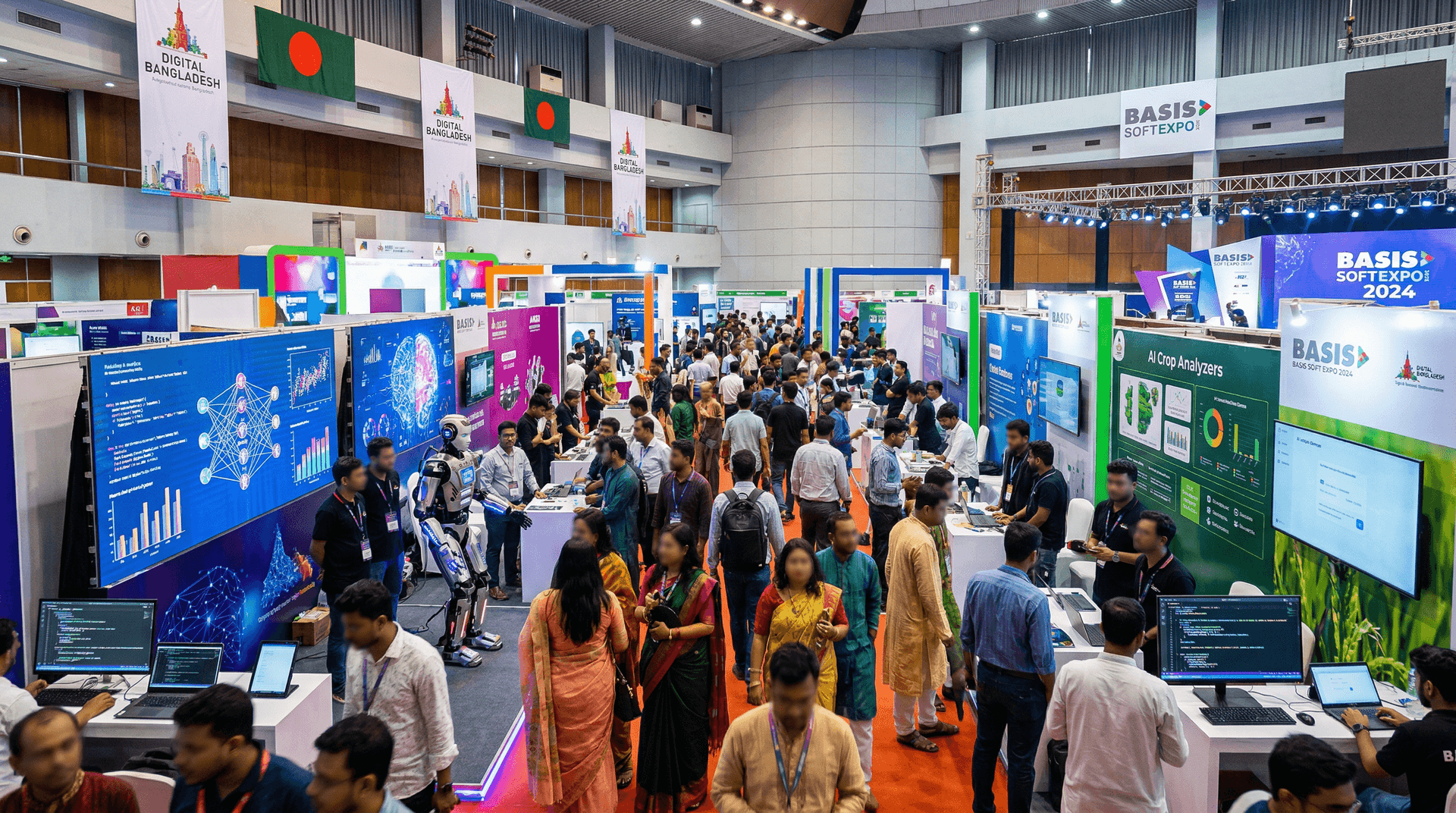
Dhaka, March 18, 2024 – The Bangabandhu International Conference Center buzzed with excitement last week as the 27th edition of BASIS SoftExpo unfolded from March 8 to 10. Organized by the Bangladesh Association of Software and Information Services (BASIS), this premier ICT event drew over 50,000 visitors, 400 exhibitors, and dozens of international delegates. Amid Bangladesh's push towards Digital Bangladesh 2.0, AI and machine learning stole the spotlight, signaling a maturing tech ecosystem ready to harness artificial intelligence for national growth.
A Decade of SoftExpo Legacy Meets AI Future
Since its inception in 1997, SoftExpo has evolved from a modest gathering of local developers to South Asia's largest ICT extravaganza. This year's theme, 'Innovate, Integrate, Inspire,' perfectly encapsulated the fusion of homegrown innovation with global trends. AI wasn't just a buzzword; it was the core of keynotes, workshops, and demos. Visitors from Jessore and other regions witnessed firsthand how AI is transforming sectors like agriculture, healthcare, and fintech – critical for Bangladesh's rural economies.
The expo featured a dedicated AI Pavilion, where startups like Brain Station 23 and BJIT Group unveiled machine learning models tailored for Bangladeshi challenges. Brain Station 23 demonstrated an AI-powered crop yield predictor using satellite data and local weather patterns, potentially boosting Jessore's jute and rice farming by 20-30%, according to their CTO, Fahad Arman.
Power-Packed Keynotes and Sessions
Day one kicked off with a keynote by BASIS President Russell T. Ahmed, who emphasized AI's role in achieving UN Sustainable Development Goals. 'Bangladesh must leapfrog into AI leadership in South Asia,' he declared, citing the country's 170 million-strong digital user base.
A highlight was the session 'Ethical AI for Emerging Economies' led by Dr. Anupam Agrawal from India’s AI hub, alongside Bangladeshi expert Prof. Mohammad Abu Yousuf from BUET. They discussed mitigating biases in ML algorithms trained on local dialects like Bangla, a pressing issue as 60% of Bangladesh's internet users prefer native languages.
Workshops delved deeper: 'Building Generative AI Apps with Open-Source Tools' attracted 500 developers, teaching integrations of models like Stable Diffusion for content creation. Another, 'ML in Fraud Detection for BFSI,' was packed with bankers exploring tools akin to those used by bKash and Nagad, Bangladesh's digital payment giants.
International flavor came from partners like Singapore's Infocomm Media Development Authority, sharing AI governance frameworks adaptable to Bangladesh's context.
Showcasing Local AI Talent
Bangladeshi firms shone brightly. 10 Minute School launched an AI tutor for secondary students, using natural language processing to explain math and science in Bangla – a game-changer for under-resourced schools in Jessore and Khulna. Pathao, the ride-hailing app, demoed predictive analytics for traffic optimization, reducing wait times by 15% in Dhaka pilots.
Startups from BASIS's incubation program presented niche solutions: an AI drone for flood monitoring in riverine areas, vital post-2024 nor'westers, and a computer vision system for garment defect detection, addressing RMG sector's $5 billion export needs.
Government presence was strong, with a2i (Access to Information) showcasing AI-enhanced e-services like the 'Shastho Batayon' health chatbot, which handled 1 million queries last year. ICT Minister Junaid Ahmed Palak inaugurated the expo, announcing a Tk 100 crore fund for AI research hubs in Dhaka, Rajshahi, and Chattogram.
Challenges and Opportunities Ahead
Yet, the event wasn't all optimism. Panels addressed Bangladesh's AI hurdles: limited compute power, with only 5% cloud adoption versus India's 25%; data scarcity in Bangla; and a talent gap, despite 50,000 annual CS graduates.
Prof. Matin from Shahjalal University of Science and Technology called for public-private partnerships. 'We need AI curricula in all universities and incentives for GPU imports,' he urged. BASIS revealed plans for 'AI Bangladesh 2025,' a national summit to bridge these gaps.
For regions like Jessore, the expo's ripple effects are promising. Local BASIS chapters plan satellite events, training 1,000 freelancers in ML via platforms like 10ms.live. With remittances fueling tech investments, AI could create 100,000 jobs by 2027, per BASIS estimates.
Economic Impact and Regional Relevance
Economically, SoftExpo generated Tk 500 crore in deals, with AI segments contributing 30%. For Jessore News 24 readers, this means accessible tech: affordable AI tools for shrimp farming analytics or e-commerce personalization for border trade.
Exhibitors reported 20% footfall from outside Dhaka, underscoring decentralization. A Jessore-based startup, AgriAI Solutions, secured funding for its ML pest detection app, promising yields up 25% for local farmers.
Looking Forward: Bangladesh's AI Horizon
As SoftExpo curtains closed, the message was clear: Bangladesh is no longer an AI spectator. With events like this fueling momentum, the nation eyes a $5 billion IT export target by 2028, powered by machine learning prowess.
For tech enthusiasts in Jessore and beyond, the next steps involve upskilling via BASIS academies and leveraging expo insights. AI isn't distant – it's here, coding Bangladesh's digital destiny.
Word count: 912