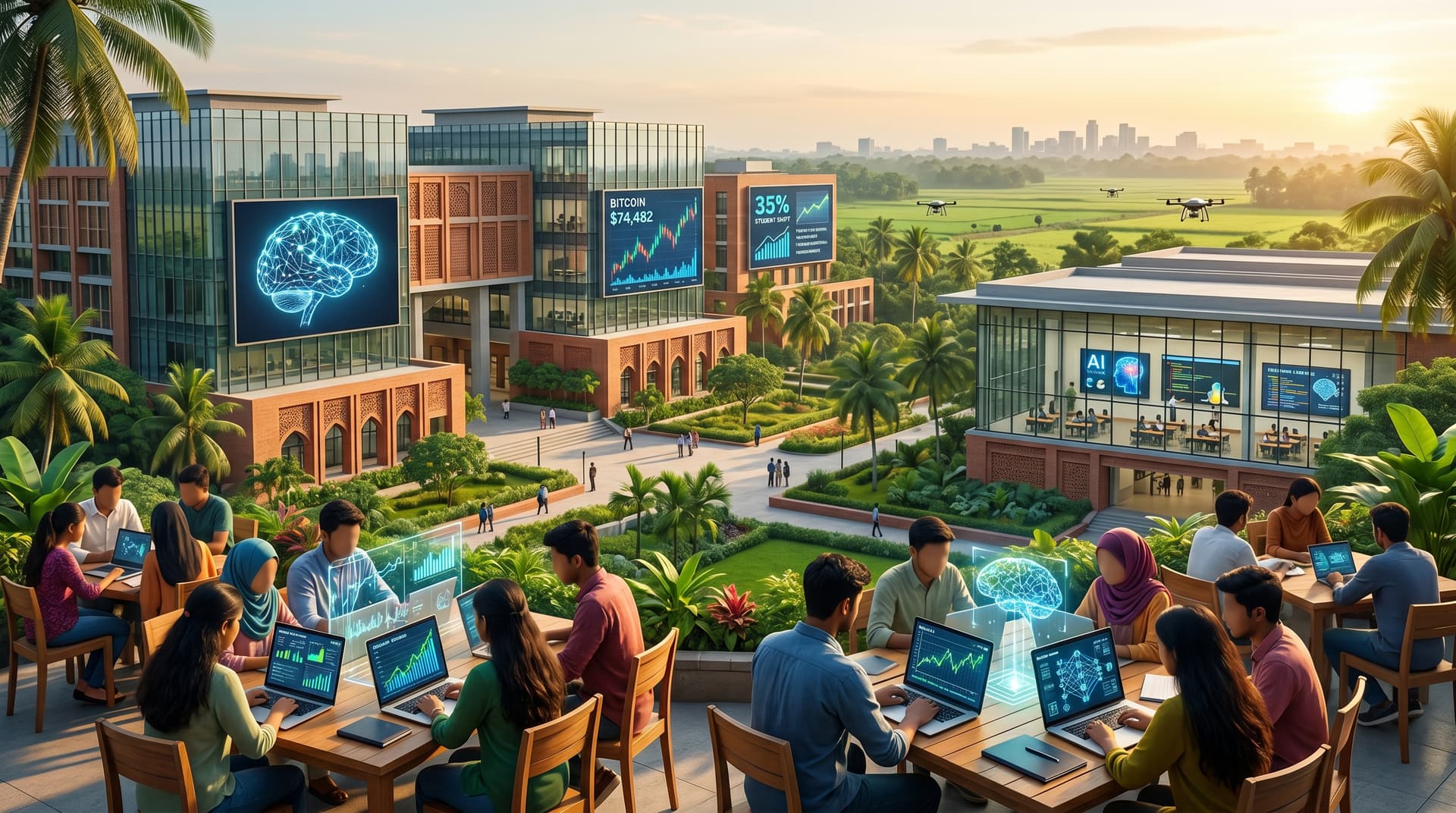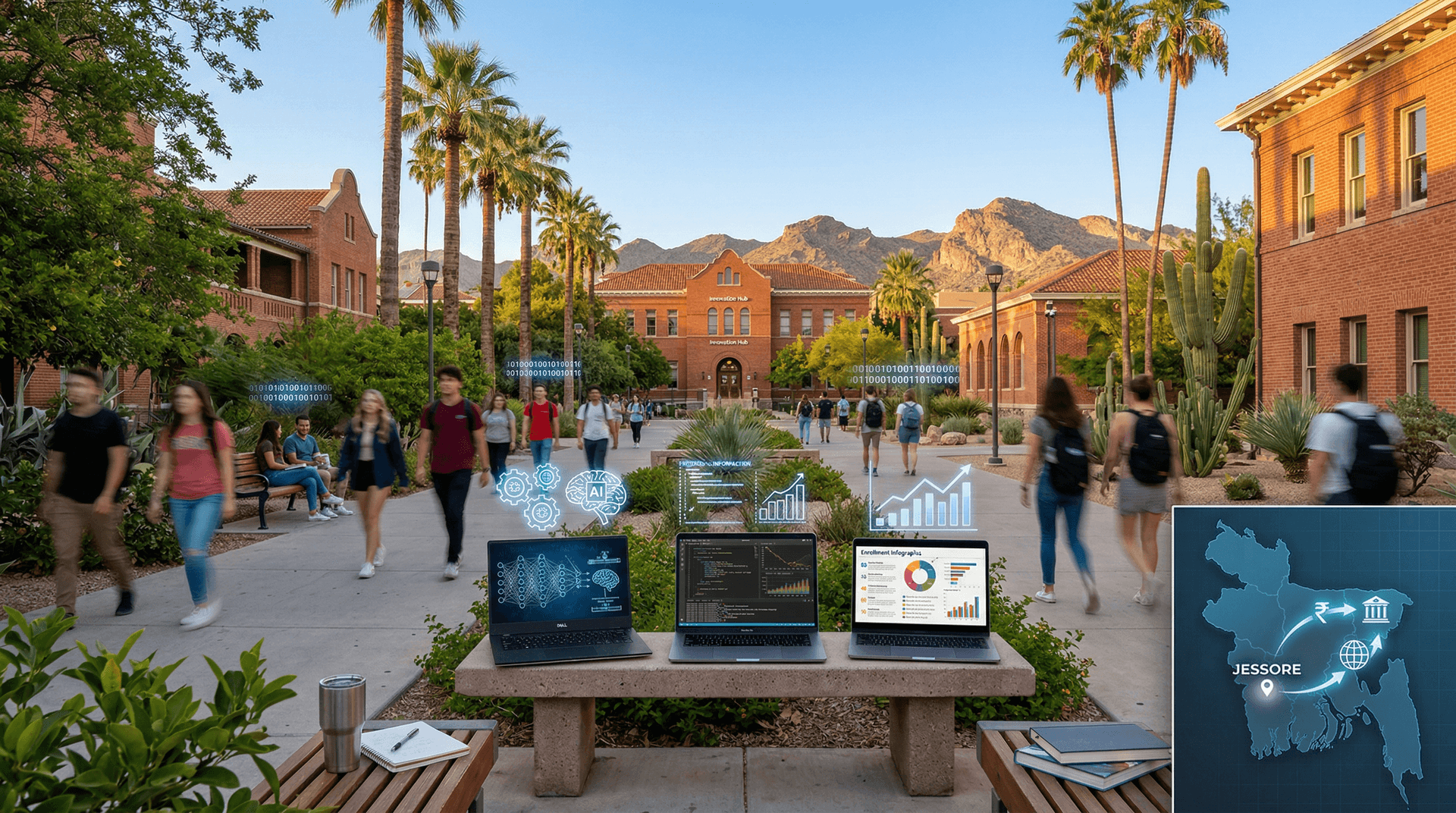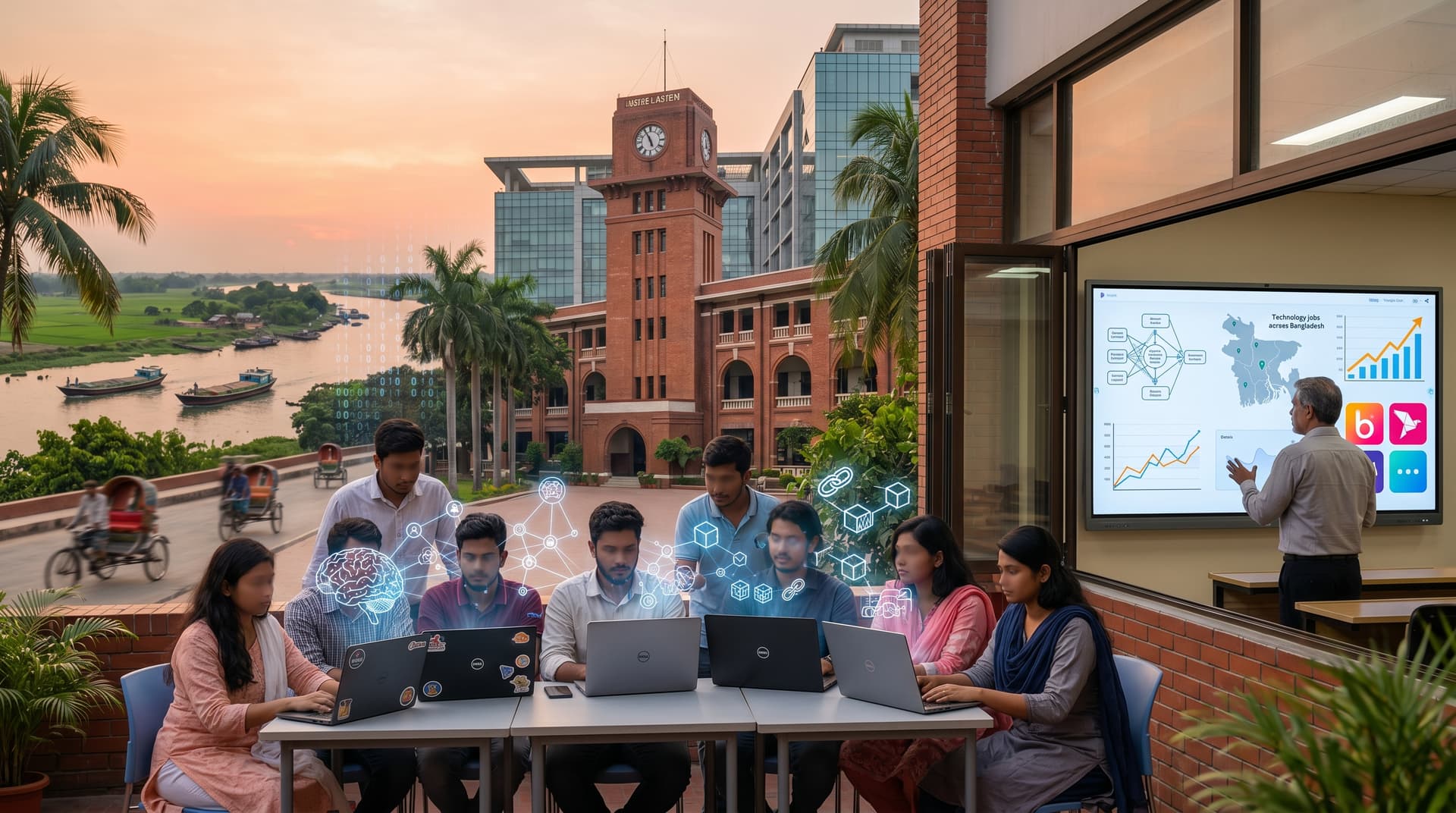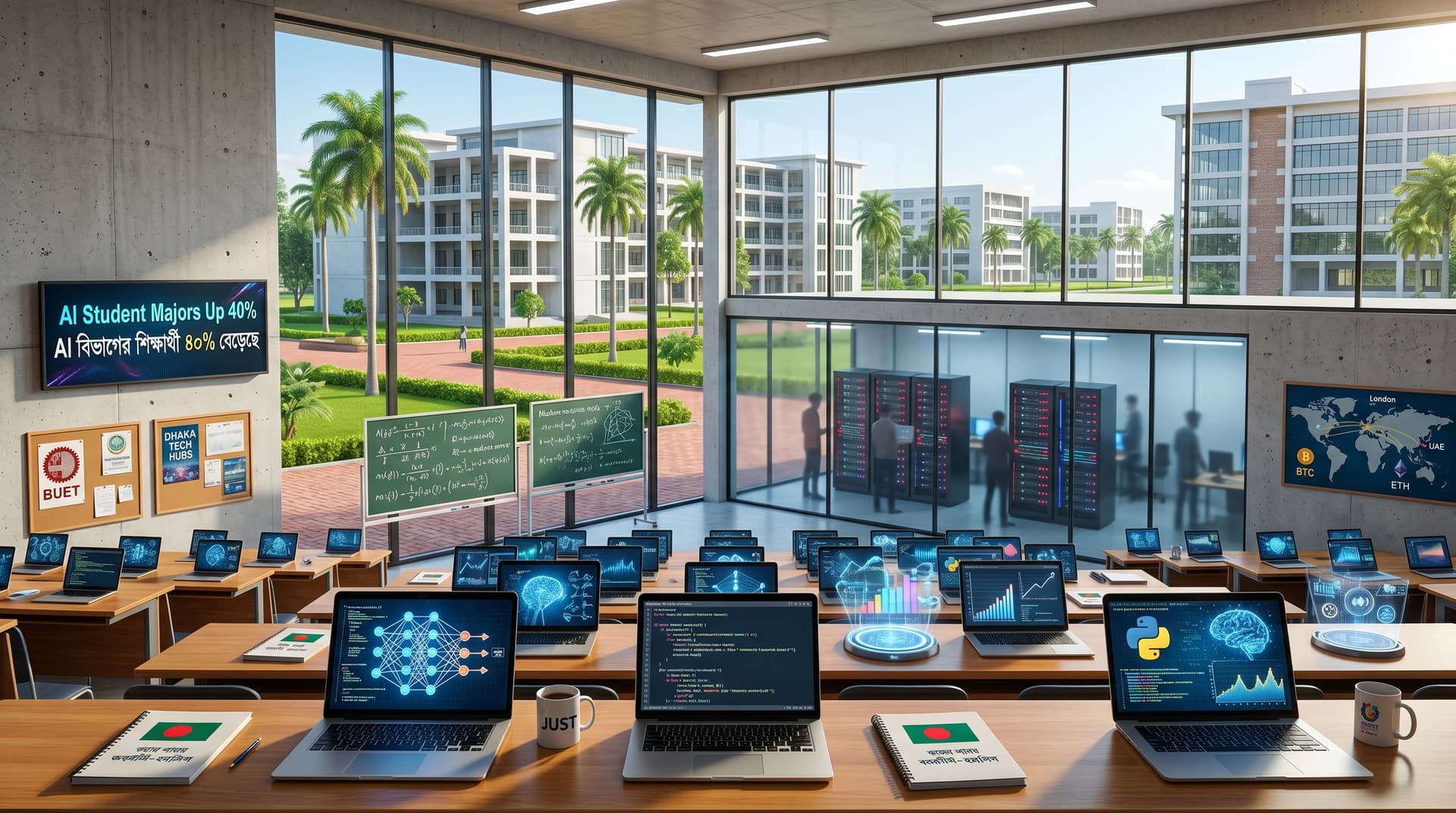
- 40% surge in AI student majors at Bangladesh universities this semester.
- Tech salaries rose 28% to BDT 60,000 monthly average.
- BTC at $74,382 fuels crypto AI job demand.
AI student majors Bangladesh universities enrolled 40% more students this semester. The University Grants Commission (UGC) released data on April 14, 2024. Tech and finance job demands drive this shift for local and diaspora youth.
UGC tracked 42,500 students across 53 public universities since January 2024. Dr. Syed Modasser Ali, UGC Chairman, links the trend to AI reshaping industries. "Students view AI as a gateway to high-paying tech and finance roles," Ali stated.
40% Surge in AI Student Majors Nationwide
UGC's March survey spanned 120,000 undergraduates. Computer science enrollment leaped 40% at BUET and Dhaka University. Jessore University of Science and Technology (JUST) posted 38% growth in the region.
Prof. Aniruddha Das, JUST Vice-Chancellor, confirmed the numbers. "AI programs filled 1,200 seats, up from 850 last year," Das said. Students from Khulna division eye Dhaka's booming tech hubs and overseas opportunities.
Tools such as ChatGPT and 10 Minute School aid career planning. TechCrunch notes similar 35% major shifts in U.S. universities.
Jessore and Khulna Fuel AI Education Boom
At JUST, engineering enrollment fell 25% as AI intake climbed 45%. Agriculture majors pivoted to AI-driven digital farming tools.
Prof. Fatima Alam, BUET Computer Science Head, cites policy incentives. "AI startup grants attracted 15,000 graduates to tech firms last year," Alam noted.
Khulna University saw 37% shifts, emphasizing garment automation AI. Diaspora remittances from UK and UAE, totaling BDT 25 billion last quarter via bKash per Bangladesh Bank, fund these tuitions. Families target USD 50,000 annual salaries abroad.
bKash and Nagad hire 70% of AI graduates within six months. Rahim Khan, bKash HR Director, reported: "We onboarded 500 interns at BDT 45,000 monthly, a 28% year-over-year rise."
AI Boosts Tech Job Prospects in Bangladesh
Bangladesh added 50,000 tech jobs in Q1 2024, aligning with Bloomberg global projections. AI roles now average BDT 60,000 monthly, with USD equivalents drawing diaspora returnees.
Jessore Export Zones seek machine learning experts. Garment factories cut defects 20% using AI, according to BGMEA data.
Upwork AI freelance earnings from Bangladesh jumped 55% to USD 1,200 monthly. Banks deploy AI for fraud detection, saving BDT 2 billion yearly. Grameen Bank trained 3,000 rural youth in AI fundamentals.
London and New York diaspora networks invest in Bangladesh fintech, bridging remittance corridors with AI innovations.
Crypto Surge Drives AI Student Majors Demand
Bitcoin hit $74,382, up 4.7%, per CoinGecko. Ethereum reached $2,369.75, up 8.1%, with Fear & Greed Index at 21.
AI analytics power blockchain trading. BUET's blockchain-AI course drew 800 students, up 50%.
Binance Bangladesh recruits for AI risk models. "AI grads command BDT 80,000 in crypto positions," Khan added. Jessore startups apply AI to mango export logistics, tapping global markets.
Crypto remittances via exchanges rose 30% per Bangladesh Bank, easing AI tuition costs for local families.
Government Backs AI Growth with Policies
Prime Minister's office awarded AI scholarships to 10,000 students on April 10, 2024. Khulna gained 1,500 slots. IDCOL funded BDT 300 million for JUST server infrastructure.
BASIS trains 20,000 developers annually. "AI positions Bangladesh for $50 billion IT exports," Das predicted. Female enrollment hit 35%, rising from 22%.
Rural internet reached 60% penetration, BTRC data shows. UGC allocated BDT 1 billion for Jessore fiber optics, linking diaspora households to education.
Finance Sector Rapidly Hires AI Talent
Standard Chartered Bangladesh added 200 AI analysts at BDT 70,000 starting pay. Crypto volatility spurs machine learning forecasting needs.
Humanities unemployment stays at 18%, but tech dropped to 4%, per BASIS. Dhaka holds 12,000 tech vacancies.
AI student majors Bangladesh will test July 2025 admissions amid 6.5% inflation. Strong job pipelines sustain demand for locals and diaspora returnees.