- 1. AI automates diaspora jobs, risking $22B remittances (Bangladesh Bank).
- 2. Government trains 50,000 migrants in coding via BASIS.
- 3. USDT stablecoins cut fees, boost Jessore inflows 40%.
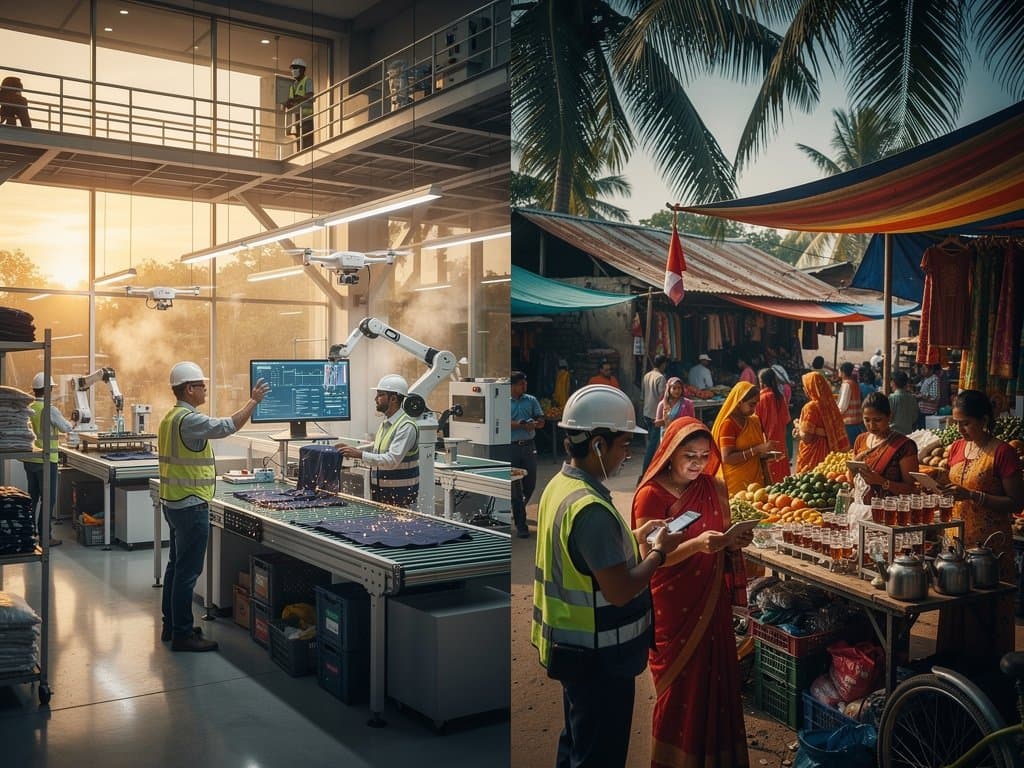
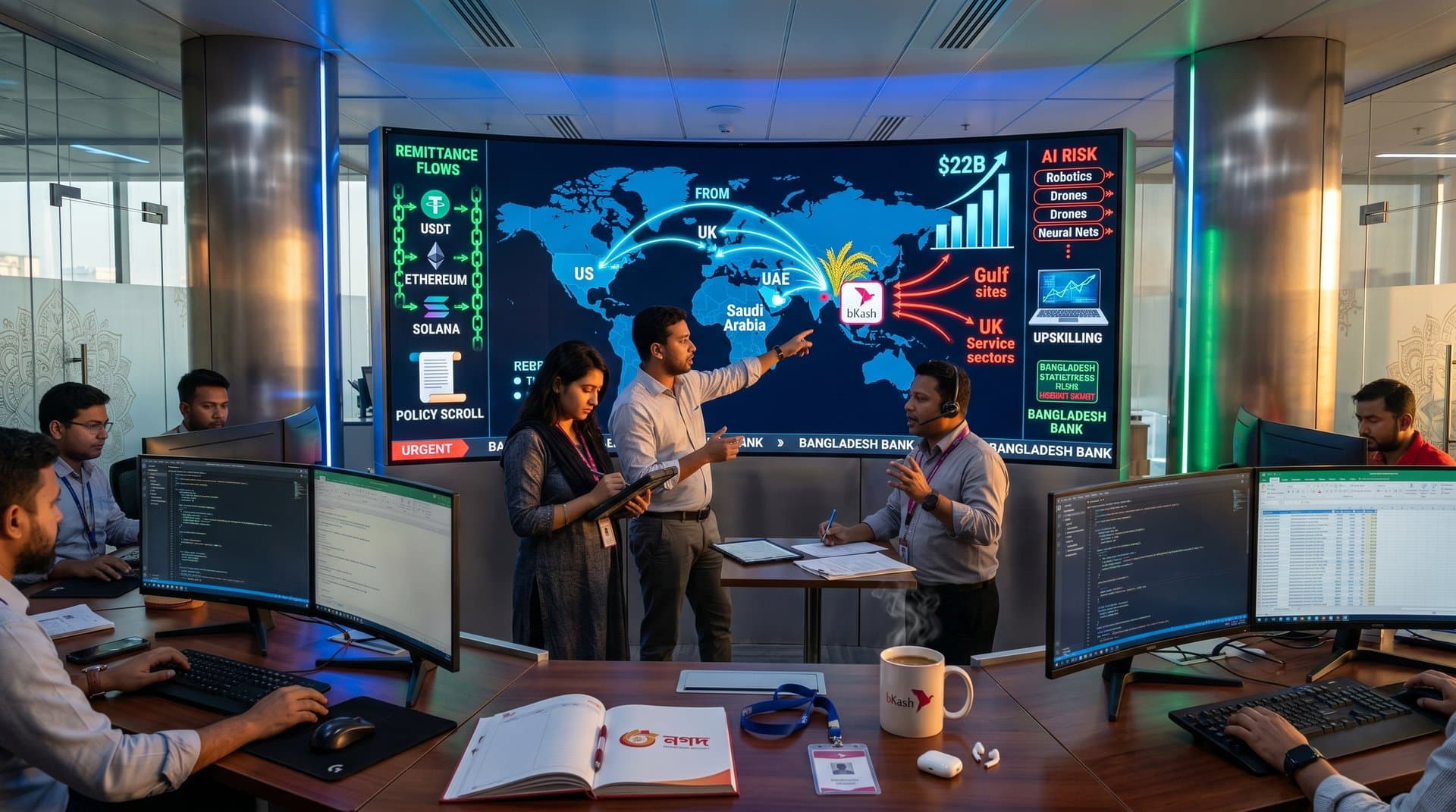
AI job disruptions abroad threaten Bangladesh's $22.1 billion remittances in 2023 (Bangladesh Bank). Gulf construction and UK service jobs held by diaspora workers face automation. These funds power Jessore's agriculture, education, and businesses via bKash and Nagad.
Bangladesh Bank reports remittances hit $2.25 billion in September 2024, up 28 percent year-over-year. Jessore households direct 15 percent of spending from these transfers, per Bangladesh Bureau of Statistics (BBS) surveys.
Diaspora Jobs Face AI Automation in Key Markets
Bangladeshi migrants fill low-skill sectors ripe for AI takeover. Saudi Arabia employs 2.5 million in construction, where AI drones and robotics manage 30 percent of tasks (World Bank KNOMAD). UAE oil fields use autonomous vehicles, slashing manual roles by 25 percent.
UK hospitality and logistics workers encounter machine learning for schedules and deliveries. KNOMAD tracks $22 billion flows: $8.5 billion from Middle East, $4.2 billion from UK, $3.1 billion from US.
US back-office finance employs 150,000 Bangladeshis; AI automates these (Minnesota Reformer). Payroll cuts strain Jessore remittances.
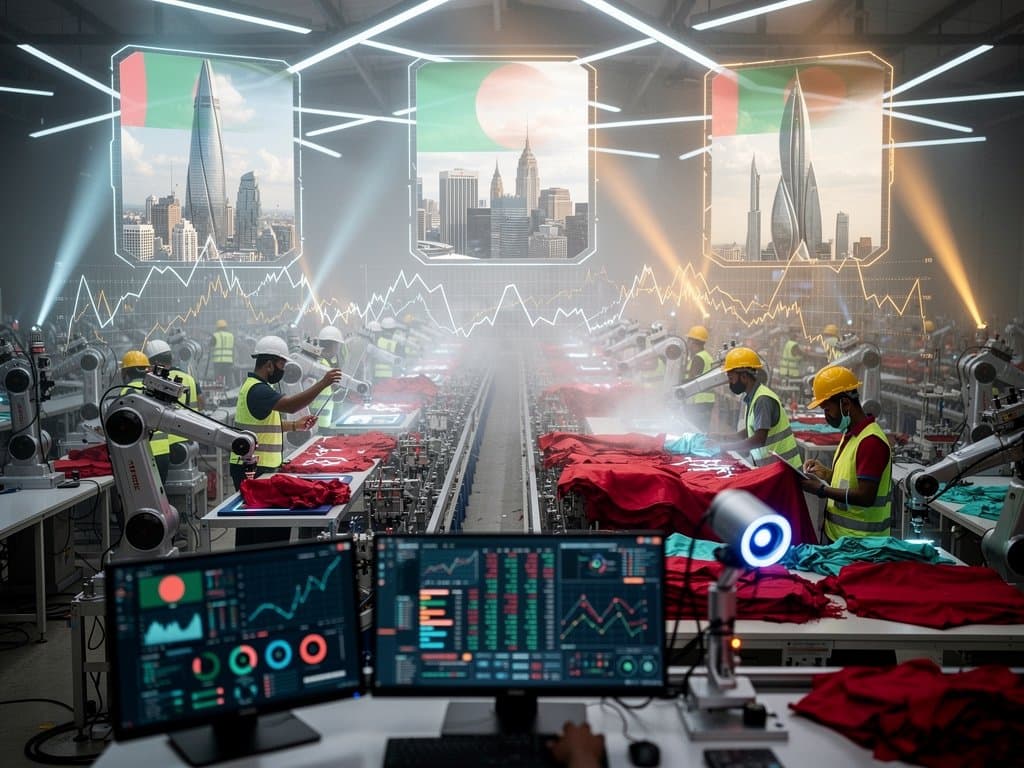
Jessore garment factories rely on remittance loans. A 10 percent drop delays BDT 50 billion in 2026 investments, BBS estimates.
Government Tech Policies Counter AI Risks
Bangladesh launches AI upskilling for 50,000 migrants. BASIS partners with BASIS SoftExpo for coding and machine learning training. Khulna University enrolls 1,200 in AI courses in 2024.
IMF urges reskilling in its January 2024 AI blog. Dhaka drafts digital finance rules, inspired by EU MiCA for crypto.
BIDA boosts returnee IT ventures. Khulna hubs simulate AI scenarios. Graduates fill bKash fintech roles, stabilizing inflows.
Prime Minister's office funds BDT 1 billion diaspora tech programs. Jessore centers teach Python and data analytics.
Blockchain Stablecoins Buffer Remittance Volatility
Stablecoins cut fees below 1 percent from 6 percent traditional rates. USDT reaches $186.7 billion market cap on October 14, 2024 (CoinMarketCap). Platforms link to bKash for instant BDT conversion.
CoinDesk notes 40 percent crypto remittance growth in emerging markets in 2023. Bangladesh pilots blockchain with Gulf via bKash and Nagad.
Ethereum ($2,408) enables DeFi smart contracts. Solana offers low-fee dApps for Jessore entrepreneurs. Bitcoin hits $77,087, up 3.2 percent weekly.
Bangladesh Bank tests CBDC, following India's e-Rupee. Regulated tokens support $500 million crypto inflows last year.
Jessore's Dual Resilience to AI Job Disruptions
Jessore farmers buy high-yield rice with remittances. Schools build tech labs from diaspora funds. AI apps predict migrant job trends.
Diaspora networks develop Solana finance tools. Khulna IT firms by returnees hire 5,000 locals (BIDA).
Blockchain protects flows. Policies sustain $22 billion remittances for 7 percent GDP growth to 2030 (IMF). Upskilling and crypto secure Bangladesh's diaspora economy against AI job disruptions.
Frequently Asked Questions
How do AI job disruptions risk Bangladesh remittances?
AI automates Gulf and UK jobs held by Bangladeshi diaspora, cutting $22B inflows (Bangladesh Bank). Jessore families face losses in agriculture and education funding.
What tech adaptations address AI job disruptions in Bangladesh?
Upskilling programs train 50,000 in coding. Blockchain like USDT reduces fees. Jessore hubs prepare workers for IT roles.
Why are Bangladesh remittances vulnerable to AI job disruptions?
Diaspora relies on low-skill labor now automated. $22B (KNOMAD) funds infrastructure. Tech policies counter with reskilling.
Can crypto mitigate AI job disruptions for remittances?
USDT ($186.7B cap) enables instant bKash transfers. Pilots grow 40% (CoinDesk). Ethereum DeFi supports secure flows.